Which license model fits us: authorized, floating or IBM tokens?
Authorized licenses suit daily users, floating licenses suit occasional users, and IBM tokens cover several IBM Engineering Lifecycle Management products. We size the mix from your user list and usage logs.
On premises, IBM SaaS or SmarterProcess hosting: what is the difference?
On premises gives you full control and your own upgrade schedule. IBM SaaS removes the servers. SmarterProcess hosting is a dedicated environment that we run, upgrade and back up for you.
How do we migrate from DOORS 9, including DXL scripts?
Project by project, with migration packages or ReqIF. We review DXL first: SmarterWidgets 2.0 covers many scripts, built-in features cover others, and the rest are rewritten. Both tools stay linked through OSLC during the move.
Can we exchange requirements with suppliers via ReqIF?
Yes, round-trip, with history kept and attributes mapped to your own types. Requirements Interchange Format (ReqIF) is an XML file format for exchanging requirements and their metadata between tools from different vendors.
Which AI features are available, and in which deployment?
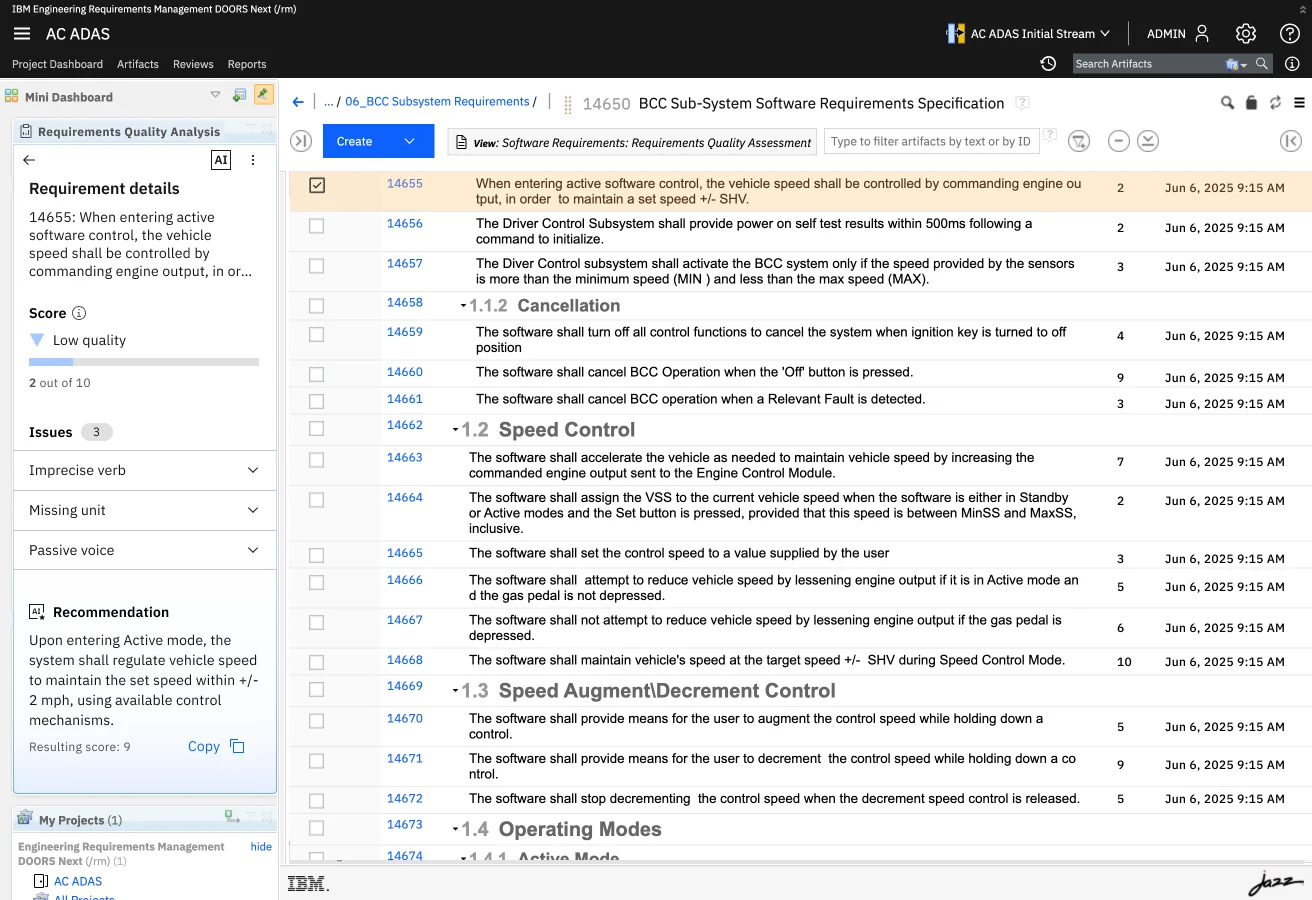
AI comes with IBM Engineering AI Hub, an add-on to DOORS Next. Version 1.4 includes requirement quality analysis, the Engineering Assistant and governed Model Context Protocol (MCP) tools, so your own AI tools can work with IBM Engineering Lifecycle Management data under the same permissions. It runs in the cloud, on premises or air-gapped, on Red Hat OpenShift or Kubernetes, with watsonx.ai, Amazon Bedrock or Azure AI as the model provider. See IBM Engineering AI Hub.
Does it work with Jira and GitLab?
Yes, through OSLC connectors. To sync requirements with Jira, Jama Connect or Polarion ALM, see IBM Engineering Integration Hub.
How do teams move from copies to product lines?
Step by step: baselines give enduring reference points, change management adds a controlled process with a full audit trail, parallel development runs several releases at once, product variants share what is common, and product line engineering brings a high level of reuse. You reuse approved and tested resources, so you get fewer defects, lower development cost and a shorter time to market.
What is new in DOORS Next 7.2?
Advanced filters now work with enumerated attributes, using all match, some match, not all match and none match. New REST APIs help keep type systems consistent across components.
Which documents can DOORS Next produce on its own?
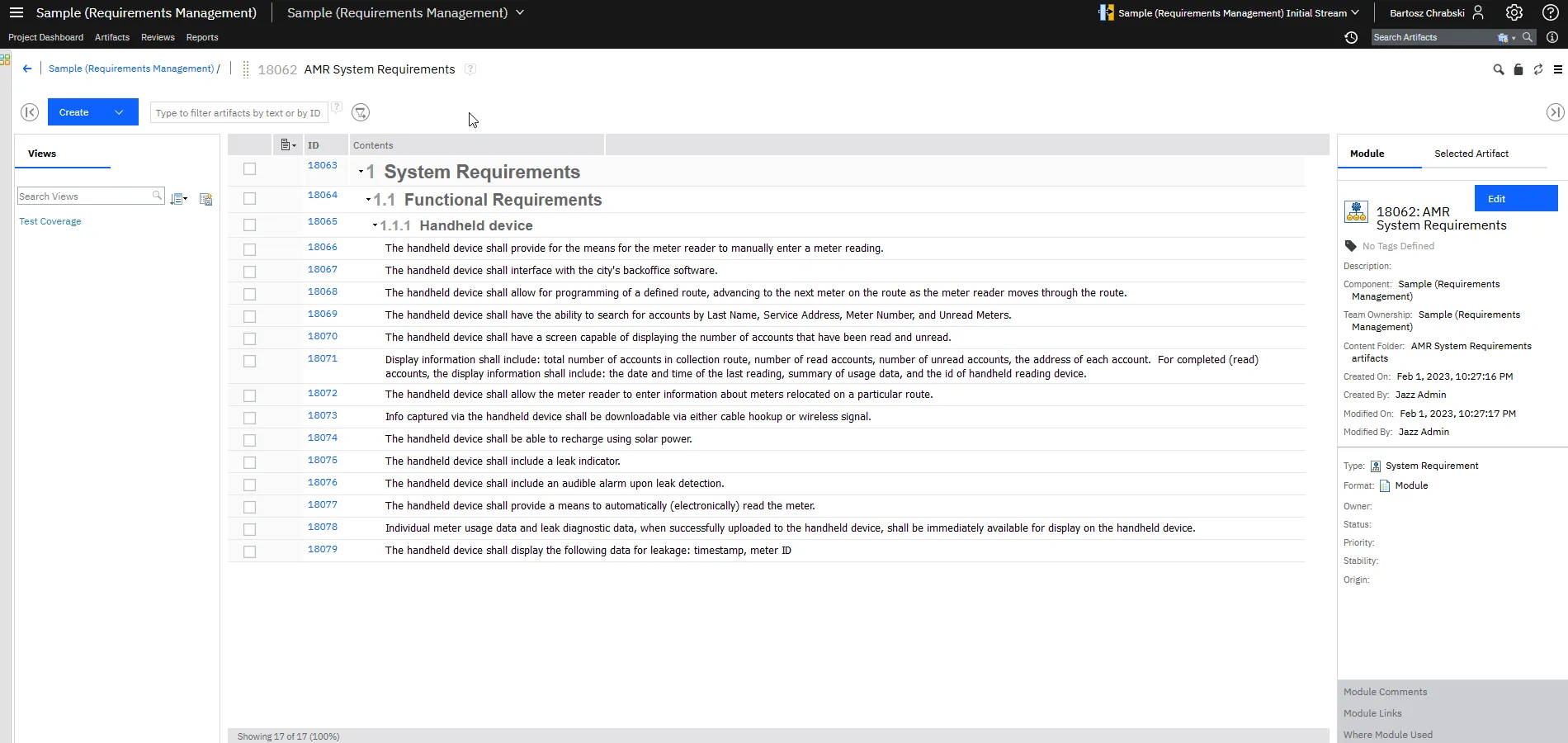
The document-style report wizard creates requirements and use case specifications, traceability reports, audit history and reviews, and prints a module as a book or a table. Output formats include HTML, PDF, XSL-FO and MS Word. For custom templates, add IBM Engineering Lifecycle Optimization – Publishing.
Do requirements still matter when AI writes code?
Yes. AI can speed up coding, but requirements remain essential to keep control of software development at enterprise scale. Spec-driven development reinforces the need for clear, governed requirements to guide delivery, manage change and reduce risk.







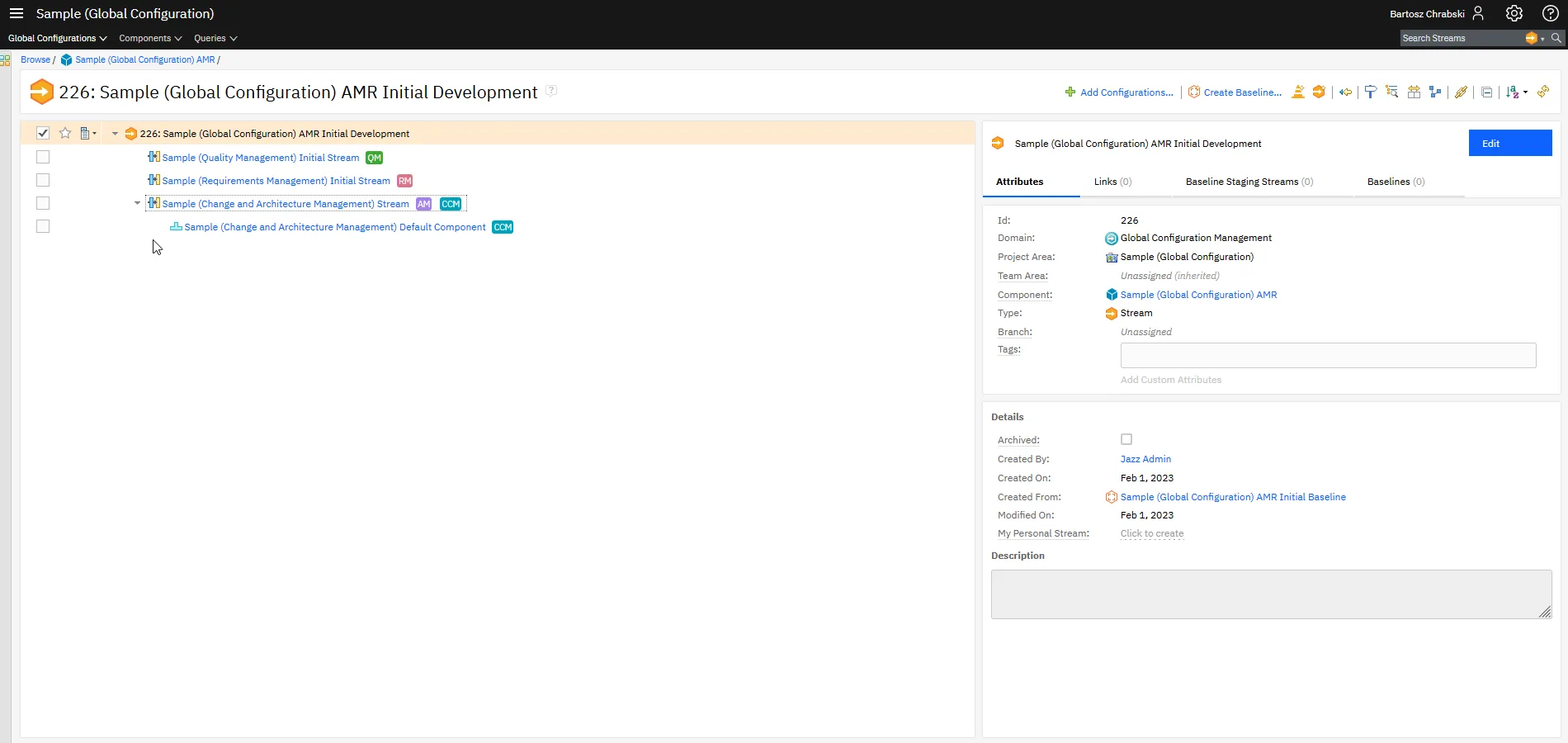
 IBM Engineering Lifecycle Management Global Configuration Management
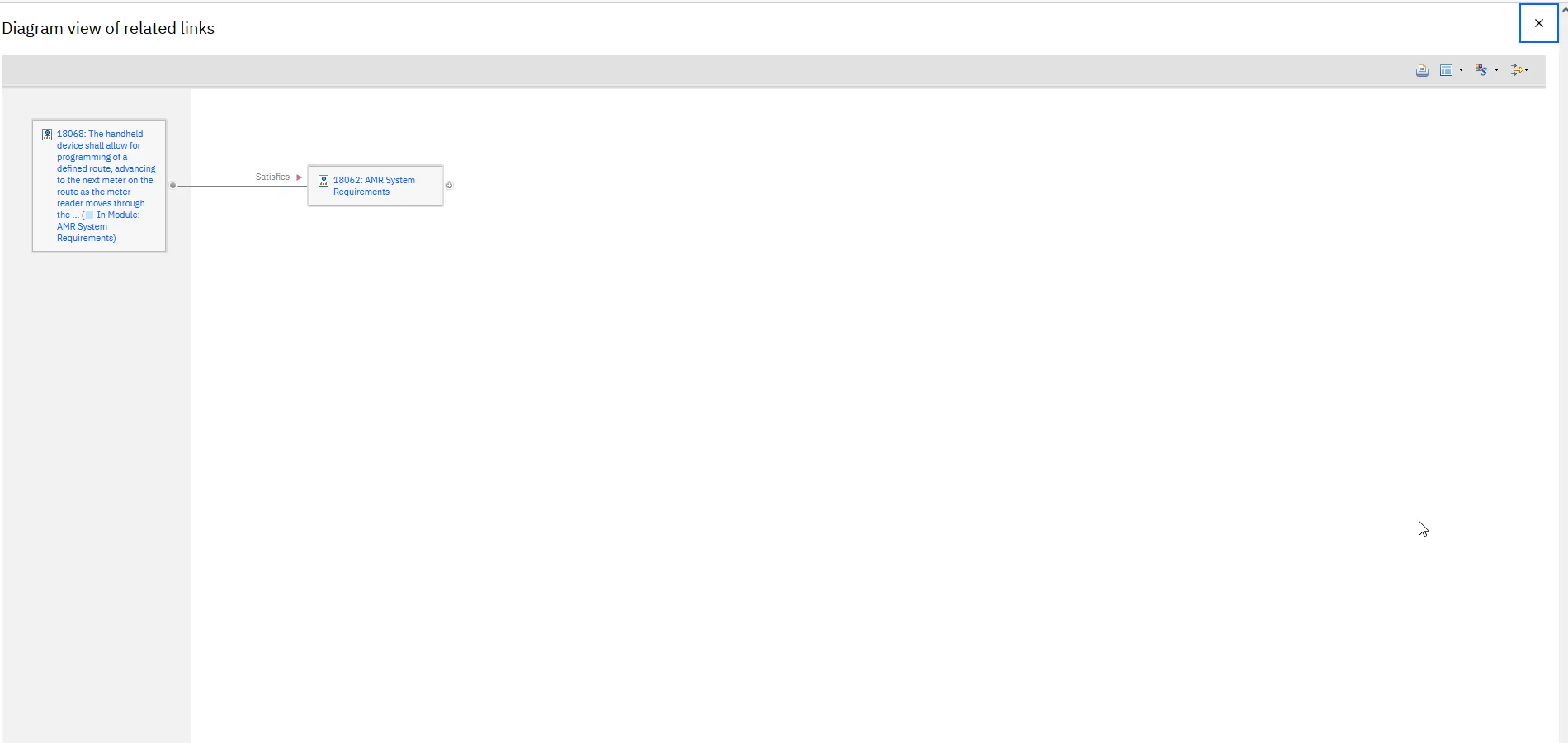
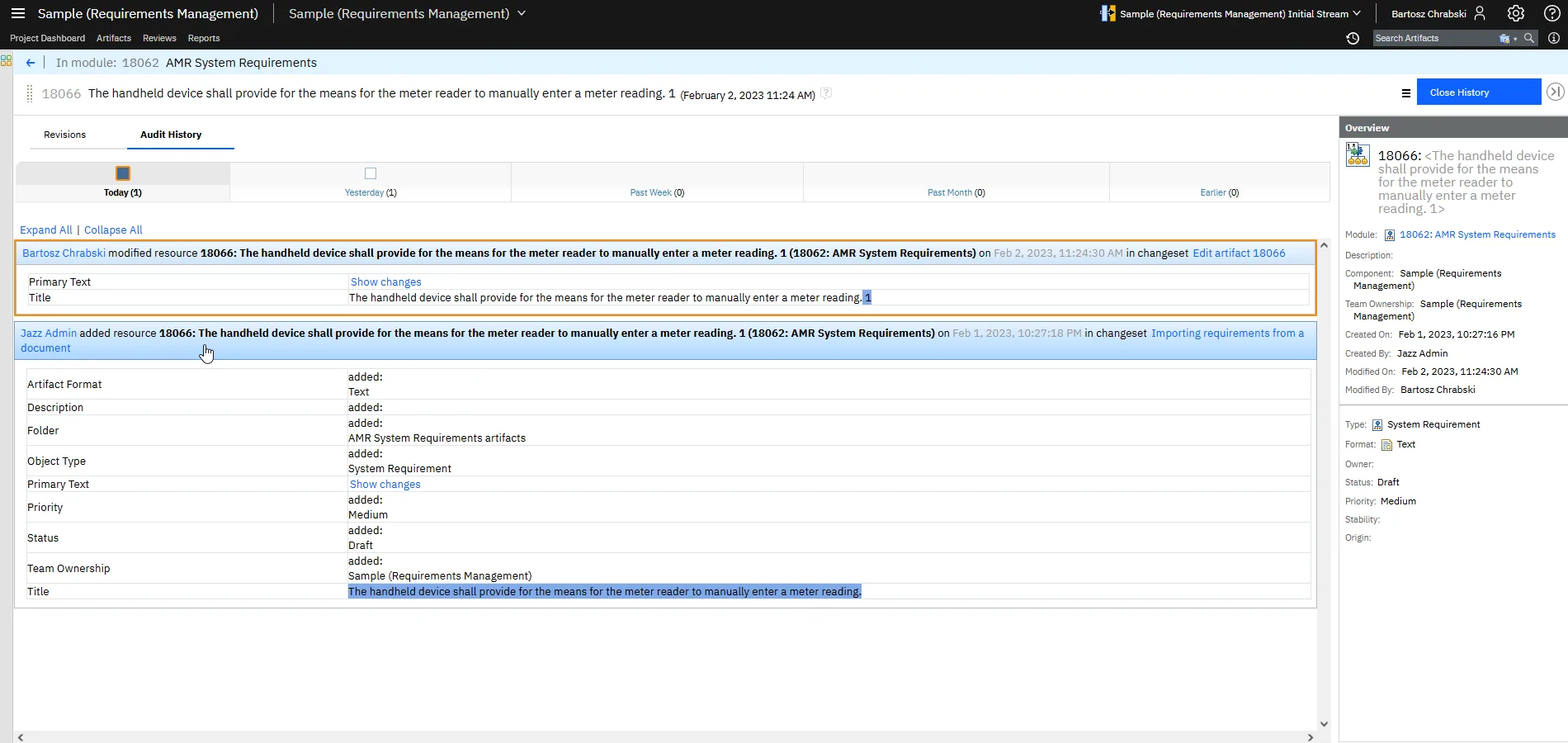
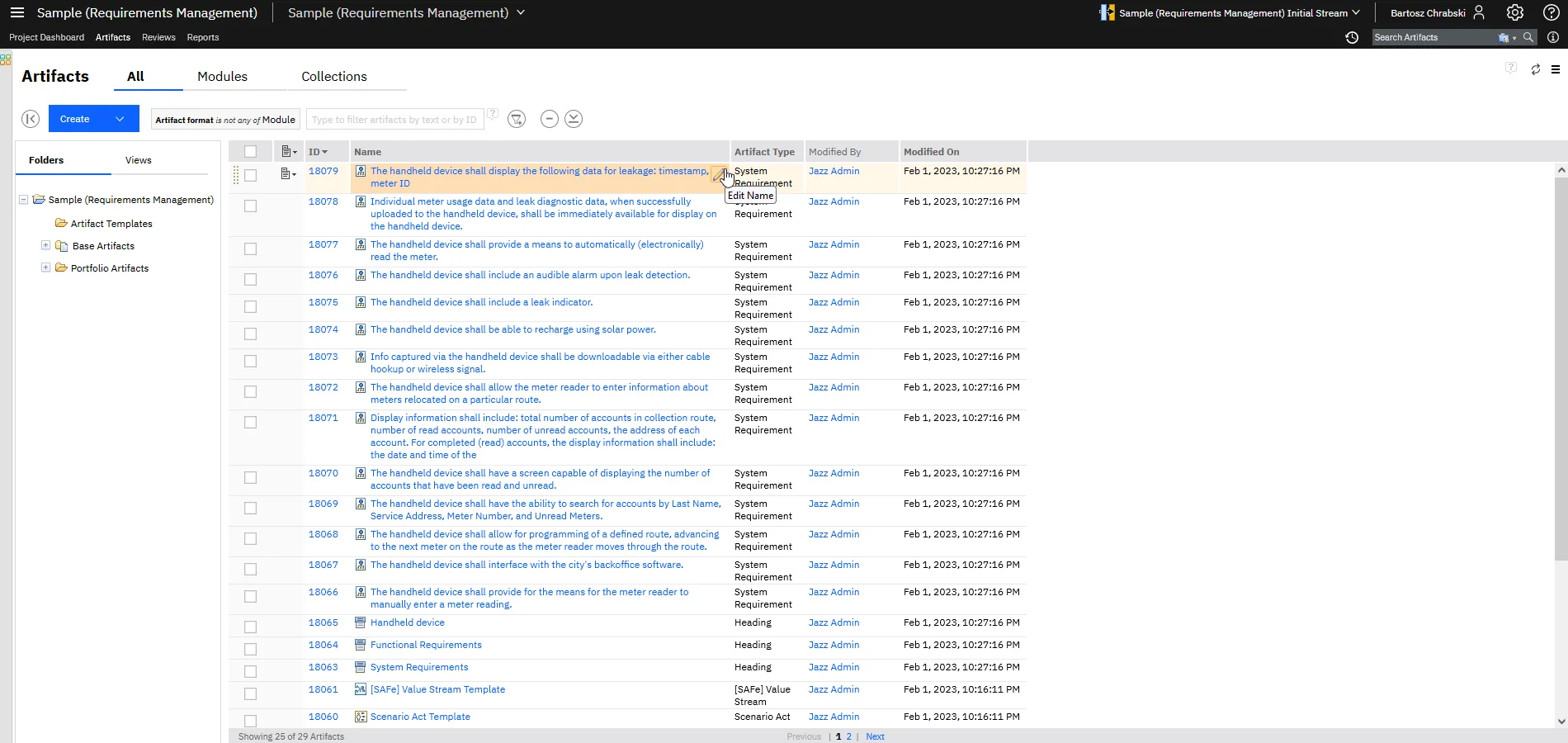








 DOORS NextSource of truth, linked through OSLC