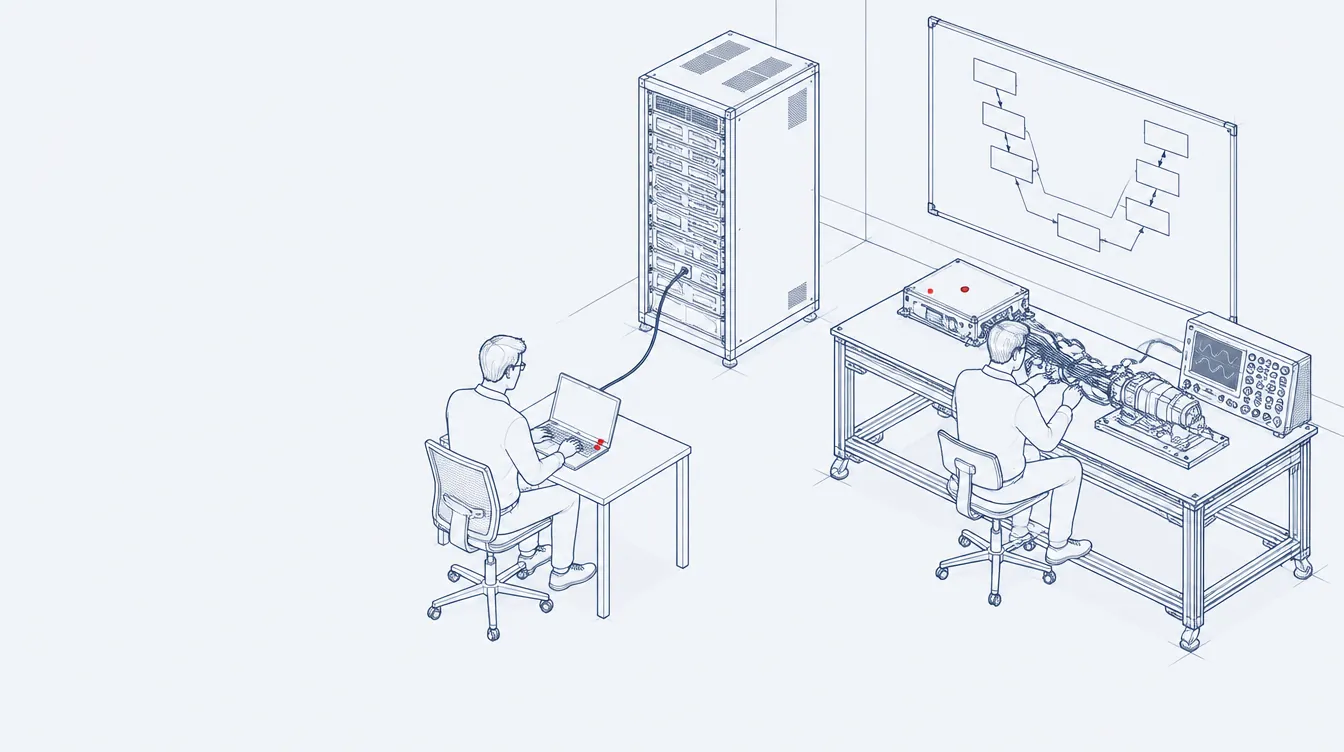

Test plans with goals and exit criteria
A test plan is a live artifact: scope, quality goals, entry and exit criteria, schedules and the test cases that cover each requirement. Release decisions are based on what it shows.


 Test Management
IBM Engineering Test Management (ETM), formerly IBM Rational Quality Manager, is a web-based test management tool. Teams plan tests, write and run manual and automated test scripts, and link every result to requirements and defects.
Test plans state quality goals and exit criteria. Risk-based testing decides what to test first, and lab management tracks the machines each test needs.
ETM replaces IBM Rational TestManager and is part of IBM Engineering Lifecycle Management, so tests link natively to requirements in IBM Engineering Requirements Management DOORS Next and defects in IBM Engineering Workflow Management.
A test plan is a live artifact with scope, schedules and the test cases that cover each requirement, so release decisions rest on what it shows. Tests are flagged as suspect when their requirements change.
Coverage views and reports show an assessor what is tested, passed or missing for a baseline. Test automation runs through adapters for IBM and HCL tools, open-source frameworks and command-line scripts, with results collected centrally.
Find the line closest to your team. Each one shows what changes with Test Management.
Capabilities
A test plan is a live artifact: scope, quality goals, entry and exit criteria, schedules and the test cases that cover each requirement. Release decisions are based on what it shows.
Rich text, images and assisted data entry for precise steps.
Run IBM, open-source and other tools and collect results centrally. Test suites run in sequence or in parallel, and you can rerun only the tests that failed.
Prioritize by importance and likelihood or impact of failure.
Tests linked to requirements, flagged as suspect when they change. Each step of a manual test script can link to one or more requirements.
Track test machines and virtual environments in one place.

Scope, goals and exit criteria.
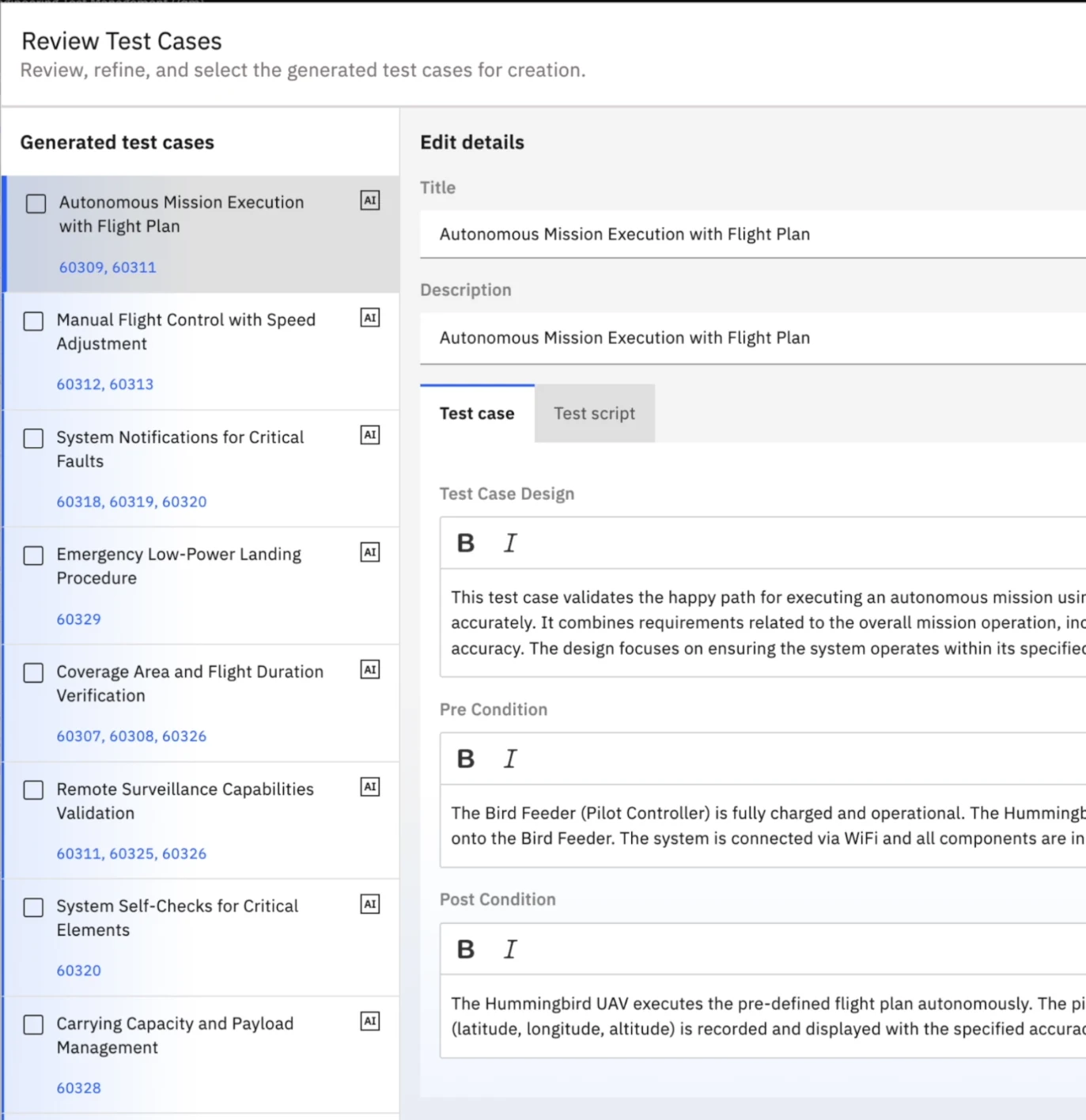
Test cases and scripts drafted from the requirements in a test plan.
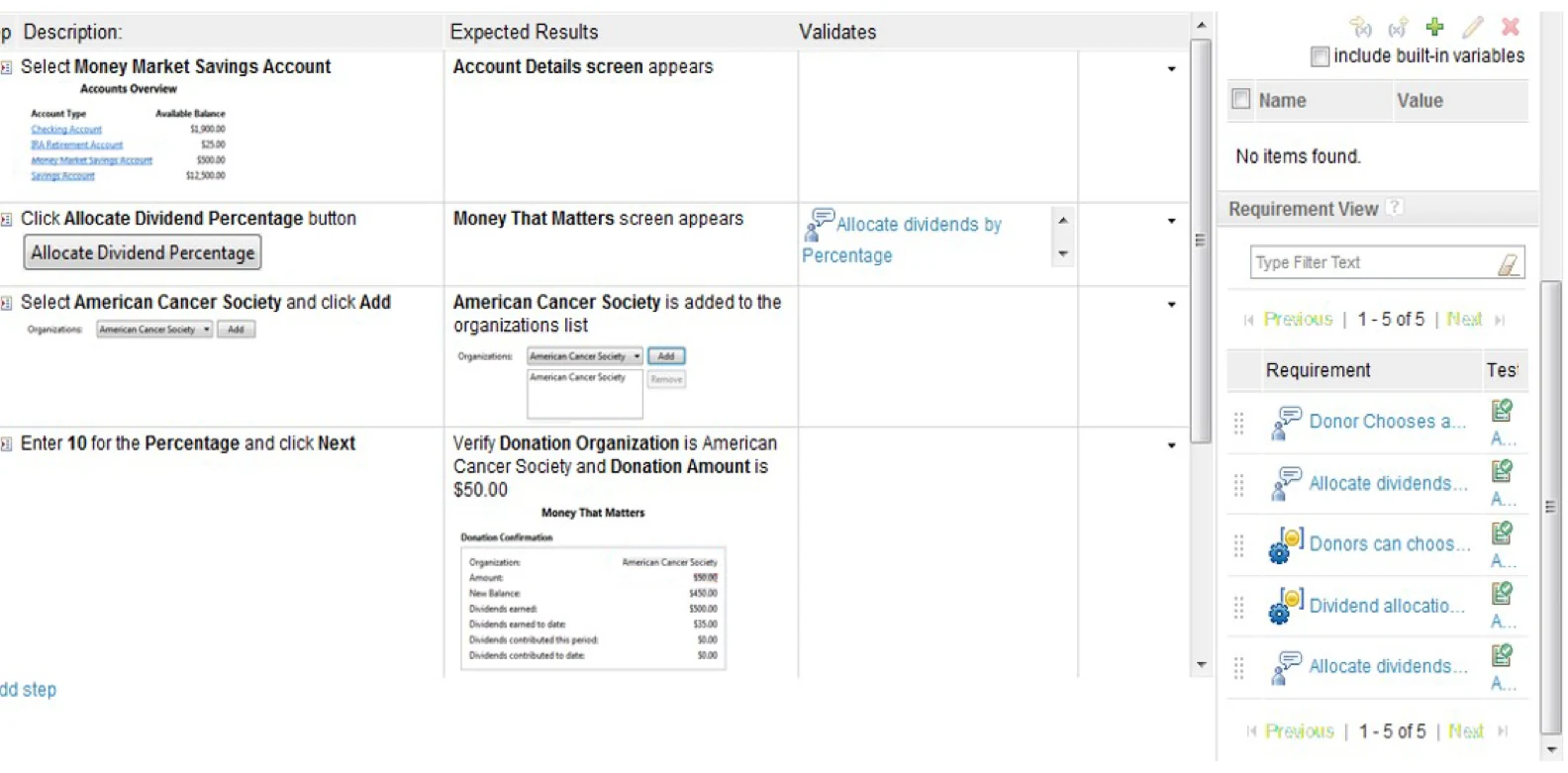
A manual test script with requirements linked to single steps.

Run a test step by step.

Result linked to the requirement.
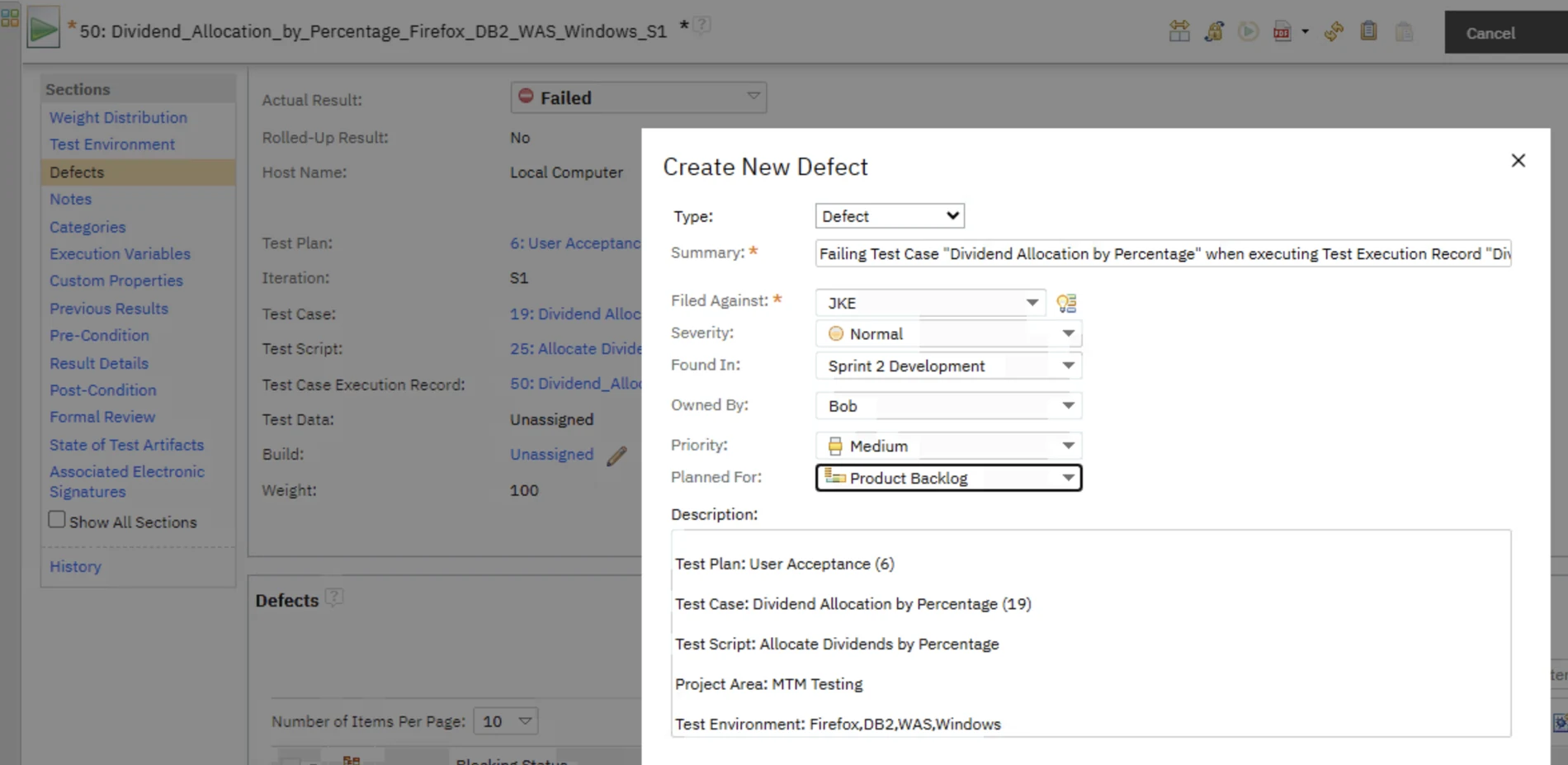
Defect raised from a failed step.
What each standard asks for, and what Test Management gives you to show it.


Software unit, integration and embedded testing linked to requirements
Test plans and results traced to software requirements, with a coverage viewISO 26262-6, clauses 9–11Safety requirements traced in both directions
Requirements linked to tests, with suspect links when a requirement changesISO 26262-8, clause 6Threat scenarios verified by tests
Cybersecurity goals linked to requirements and testsISO/SAE 21434, clause 15

Requirements-based testing with coverage of high- and low-level requirements
Test cases and results traced to each requirement, with a coverage view per baselineDO-178C 6.4Trace to tests in both directions
Links to high-level and low-level requirements, with trace views and gap reportsDO-178C 5.5, 6.5Security measures verified
Security requirements on the same links as safety, with a review workflowDO-326A

Tests for every software requirement, with results, anomalies and retests
Test cases and results traced to each requirement, with anomalies linked as defectsIEC 62304, 5.7Effectiveness of risk controls verified
Risk controls linked to verification resultsISO 14971, 7Audit trails and electronic signatures
Electronic signatures on reviews and approvals, with the history of who signed, when, for what action and why.21 CFR Part 11, §11.10, §11.50

Tests specified, run and reported against requirements
Test plans, cases and results traced to requirements, with reviews and approvals by roleEN 50716Trace from requirements to tests, at the depth the SIL sets
Trace views and gap reports per SILEN 50716Security requirements verified
Security tests linked to zones, threats and security requirementsCLC/TS 50701 IBM Engineering Requirements Management DOORS NextTest cases validate requirements
 IBM Engineering Requirements Management DOORSRequirements from DOORS 9
 IBM Engineering RhapsodyTests verify the design
 Test ManagementThe proof that requirements are met. Every result links back to the requirement it validates.

IBM, open-source and others.

Quality dashboards.

Tests per variant.

Test environments.
Trusted in regulated industries
Our clients build products under strict standards and regular audits. We supply licenses, implementation, hosting and training.
Our clients build products under strict standards and regular audits. We supply licenses, implementation, hosting and training.













































We are a partner and reseller of these technology providers.


Trainings
 Introduction to IBM Engineering Test Management2 days
 Introduction to IBM Engineering Requirements Management DOORS Next2 days
 Introduction to IBM Engineering Workflow Management2 days
 Introduction to IBM Engineering Lifecycle Management Global Configuration Management2 days
 Introduction to IBM Engineering Jazz Reporting Services1 day
Services
Testers who work in ETM every day need authorized or floating licenses; IBM tokens cover people who also use DOORS Next or Workflow Management. We size the mix from your user list.
On premises gives you full control. IBM SaaS removes servers entirely. Hosting by SmarterProcess is a dedicated environment we run, upgrade and back up for you.
Yes. Rational Quality Manager was renamed IBM Engineering Test Management, so an RQM server upgrades in place with its test plans and results. ETM also replaces IBM Rational TestManager.
ETM runs tests through adapters for IBM and HCL tools, open-source frameworks and command-line scripts, and collects the results centrally. Adapters include IBM Engineering Rhapsody Test Conductor, Selenium, JUnit, HP LoadRunner and Unified Functional Testing, dSPACE SYNECT and AutomationDesk, ECU-TEST, Piketec TPT, National Instruments TestStand, Vector CANoe and ETAS LABCAR. A Command Line Adapter and a Test Automation Adapter API cover other tools.
Each test case links to the requirements it validates. Coverage views and reports show what is tested, passed or missing for a baseline.
Yes. Through OSLC connectors, Jira issues and GitLab merge requests link to test cases and results.
Yes. You can assign test artifacts to a team area, so only members of that team area and its sub-team areas can read them. Worldwide teams can then share one project area and still comply with export regulations. This works only in project areas without baselines or full configuration management.
Each artifact type comes with predefined states that you can customize, along with the transitions between them. A process advisor on a state can be a pre-condition or a follow-up action.
Test Management 7.2: create a historical baseline from any date and time in the past, improved rich text editing with resizable images, improved PDF export, and inaccessible requirement links now disabled with an explanation.
Add them to the ELM Mini Dashboard and hand repetitive requirements work over to them. Each one previews its changes first.
Browse all widgets