The Software and Systems Engineering Experts​
SmarterProcess logo

Contacts

SmarterProcess / ReqPro

ul. Antoniego Pajdaka 5/98
03-134 Warsaw, Poland
NIP : 8921405210
Regon : 146293701

About Products

About us

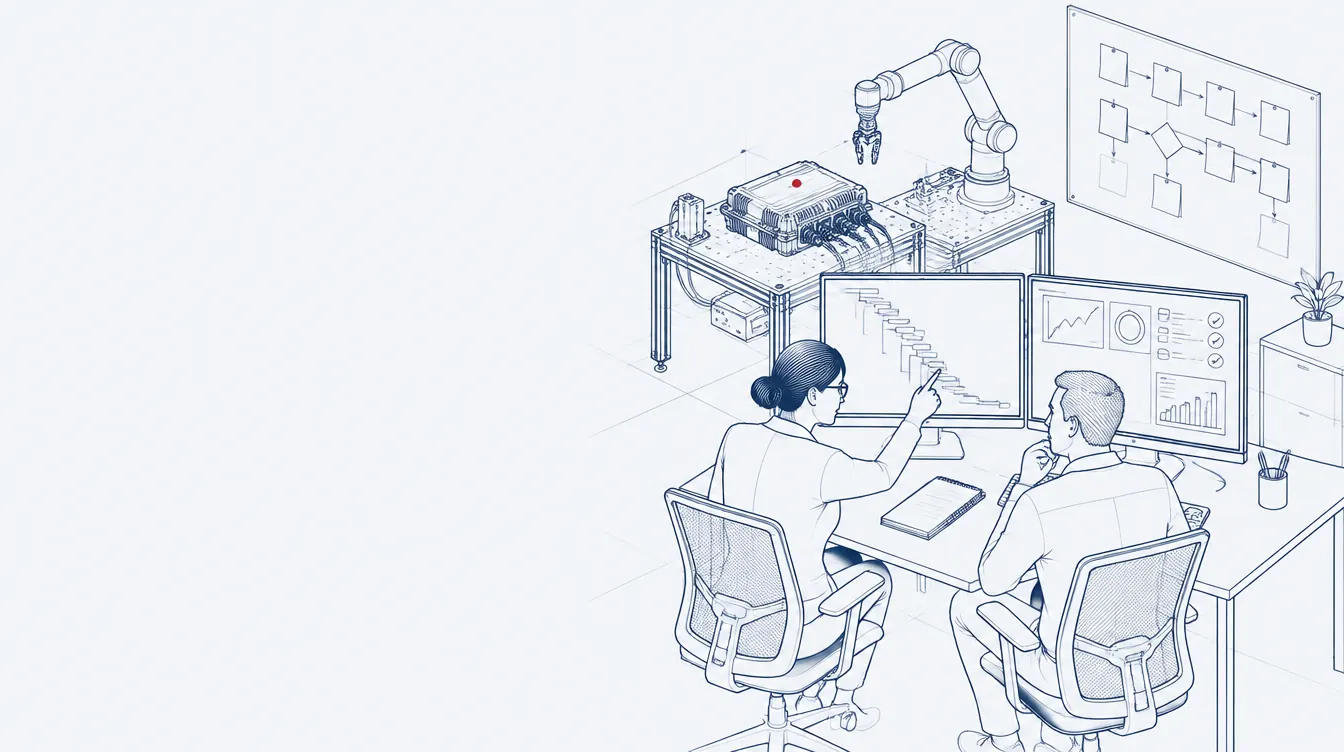
Ink drawing: a consultant beside a client engineer at two monitors, with a control unit on a test bench behind them
Sketch: a completed checklist with an acceptance seal and a key on a server module

Handed over, ready to run · your team keeps the know-how

Process Consulting

Organization of the software testing process

Test strategy, roles and evidence set up so defects are found early and every test traces back to a requirement.

Overview

An organized test process that lowers product risk

A repeatable test process finds defects before release and shows which requirements are covered. Your teams test the areas that carry risk, and products reach the market on time.

We assess how your teams test today, agree with your management how formal the process should be, and introduce the procedures, document templates and tools your team keeps using.

We set up the test strategy, roles and evidence so that every test traces back to a requirement. For each release you can show which requirements were tested and which were not.

The approach depends on the size and operating model of your company, so the first conversation is about how you test today, not about a tool.

Process assessmentISO/IEC/IEEE 29119ISTQBTPI NEXT

Your starting point

Where does your test process stand today?

Most teams come to us at one of these points. On each card, the note is the problem and the stamp is where the work takes it.

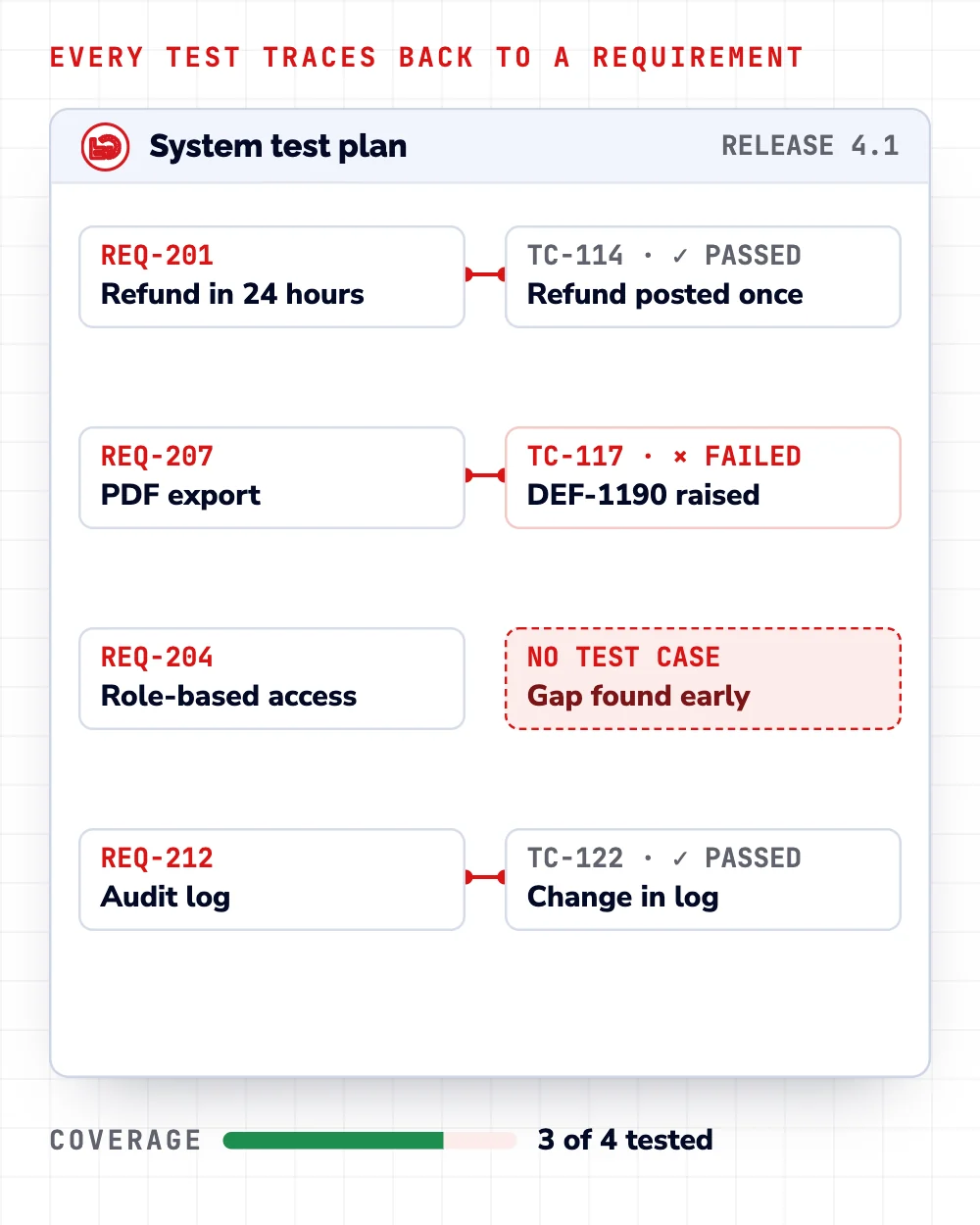
A test plan with results
No repeatable process behind itRepeatable procedures and standards
Defects found late
Costly errors found after releaseDefects found early
Untested requirements
Coverage counted by handEvery test traces to a requirement

Three ways in

Pick the situation closest to yours

Where we start depends on how your company tests today.

Large and mature companies

You need a formal audit

Who it fits

Organizations with a defined test process that want it measured.

What we do

Organizational and process audit against a recognized model.

Based on

TPI NEXT · ISO/IEC 33000

You get

Your position against the model and an improvement plan.

Smaller teams

You test, but nothing is written down

Who it fits

Teams with repetitive processes that are not documented.

What we do

An informal assessment, done with your management, of strengths, weaknesses and unwritten procedures.

Based on

ISO/IEC/IEEE 29119 · ISTQB

You get

Repeatable procedures and standards, as formal as your objectives need.

Very small companies

You are building QA from scratch

Who it fits

A few testers, or developers who also test.

What we do

Methodology training for the people who test, and documentation standards they can follow.

Based on

ISTQB

You get

A trained team and document templates you keep using.

How it runs

From the first look to a team that runs the process

Talk to an engineer
  1. Scope call

    We agree on goals and which projects to look at.

    YouGoals and the projects to look at
    We deliverAgreed scope
  2. Look at how you test

    Interviews with testers and managers, your procedures, test plans and defect data.

    YouAccess to testers, test plans and defect data
    We deliverInterviews and document review
  3. Assess

    A formal audit against a model, or an informal assessment for smaller teams.

    YouTime for interviews
    We deliverAssessment report
  4. Agree the plan

    With your management: which procedures and standards, and how formal.

    YouA decision on scope and formality
    We deliverImprovement plan
  5. Introduce

    We put the procedures and document templates into use and set up the tools you chose.

    YouPeople who will own the procedures
    We deliverProcedures, templates, tool setup
  6. Train

    QA teams and managers learn the new process and tools.

    YouThe team for training
    We deliverCourses for QA teams and managers

What you get

What stays with your team

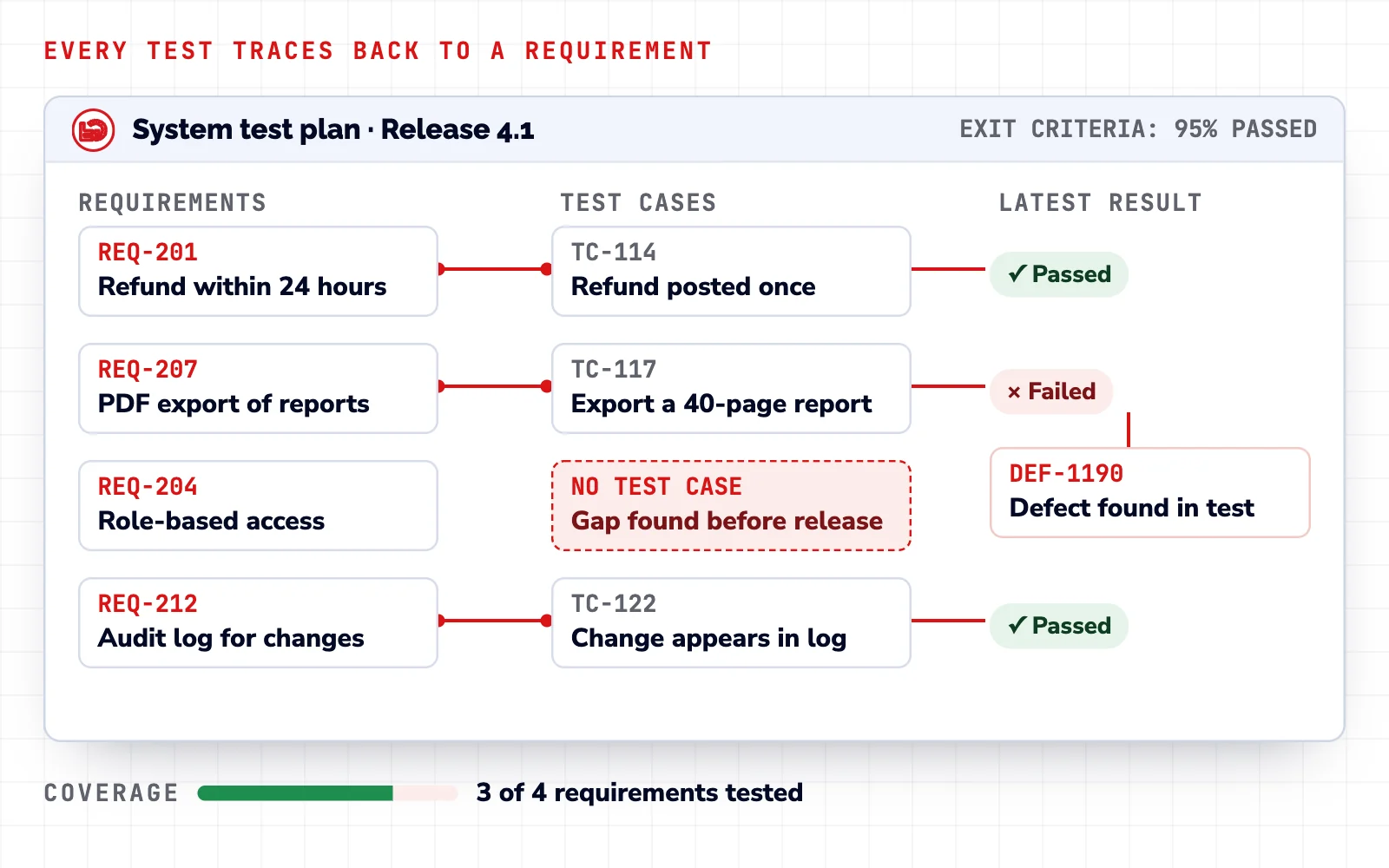
A test plan in which each requirement links to its test cases and their latest results, with one requirement still without a test and a failed test linked to a defectA test plan in which each requirement links to its test cases and their latest results, with one requirement still without a test and a failed test linked to a defect
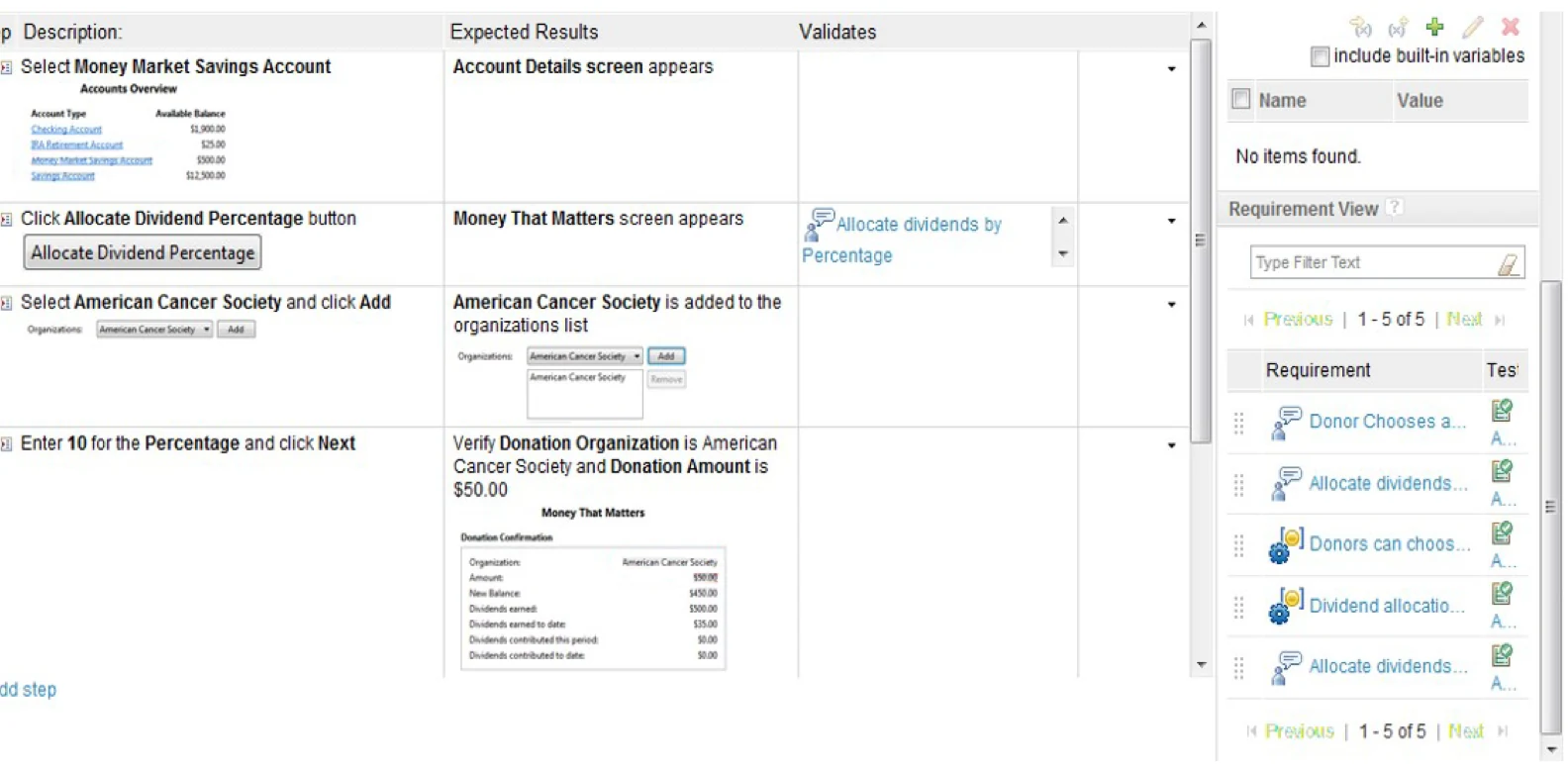
Process first, then the tool: test cases linked to requirements in IBM Engineering Test Management
  • An assessment report

    Strengths and weaknesses of how your teams test today.

  • Your position against the model

    Where you stand against TPI NEXT or ISO/IEC 33000, after a formal audit.

  • An improvement plan

    What changes first and who owns each change, agreed with your management.

  • Procedures and document templates

    Test plan, test case and test report templates based on ISO/IEC/IEEE 29119.

  • Tools chosen with reasons

    A written comparison against your needs, the maturity of your organization and your budget.

  • A configured IBM ETM project

    Templates and links from test cases to requirements, if you choose IBM Engineering Test Management.

  • A trained team

    QA teams and managers trained in the new process, the methodology and the tools.

FAQ

Questions we hear before a test process project

Which standards do you work with?

Assessments use TPI NEXT or ISO/IEC 33000, the successor of ISO/IEC 15504 (SPICE). Procedures and documentation follow ISO/IEC/IEEE 29119, which replaced IEEE 829, and ISTQB. For requirements we follow IREB.

Should we buy a test tool before we fix the process?

Usually not. A tool works best on a repeatable process that can be evaluated. Once the process is in place, the assessment shows which tool fits your team and what it has to support.

How do we show which requirements are tested?

In IBM Engineering Test Management, each test case links to the requirements it validates. Coverage views and reports show what is tested, passed or missing for a baseline.

Do we have to use IBM tools?

No. We work with IBM, HCL, OpenText (formerly Micro Focus) and open source tools, and select them for your needs, the maturity of your organization and your budget.

What do you need from our team?

Access to your test team, the projects we look at and your current procedures. Your managers take part when we agree the plan.

Can you work with our existing test plans and templates?

Yes. We review your current test plans, templates and procedures first and build on what already works.

Newsletter

The SmarterProcess newsletter

Tips, product news and webinar invites on IBM software, DOORS and the other vendors’ tools we deliver. One email a month.

Get it in your inbox

Check your inboxWe’ve sent a confirmation link to . Click it to start your subscription. Can’t see it? Check your spam folder.