Integration and API
Services, messages and interfaces between systems, tested before a screen exists.
Tools
- HCL DevOps Test Integrations and APIsformerly Rational Integration Tester
- Open source API test libraries




Handed over, ready to run · your team keeps the know-how
Process Consulting
We check what is worth automating, choose the tools and build tests that run in every pipeline.
 Test automation
Overview
We check what is worth automating, choose the tools and build tests that run in every pipeline.
Before any script is written, we go through your current tests with your team. Each test goes into one of three groups: automate first, keep manual, or fix before automating. One business flow then runs as a pilot, so you see how the tests behave in your pipeline before the full suite is built.
The suite covers four test levels: integration and API, user interface, performance and security. For each level we pick the tool that fits your needs, the maturity of your team and your budget, from HCL DevOps Test and OpenText to open source. Your testers write the later scripts with us, so they can run and extend the suite on their own.
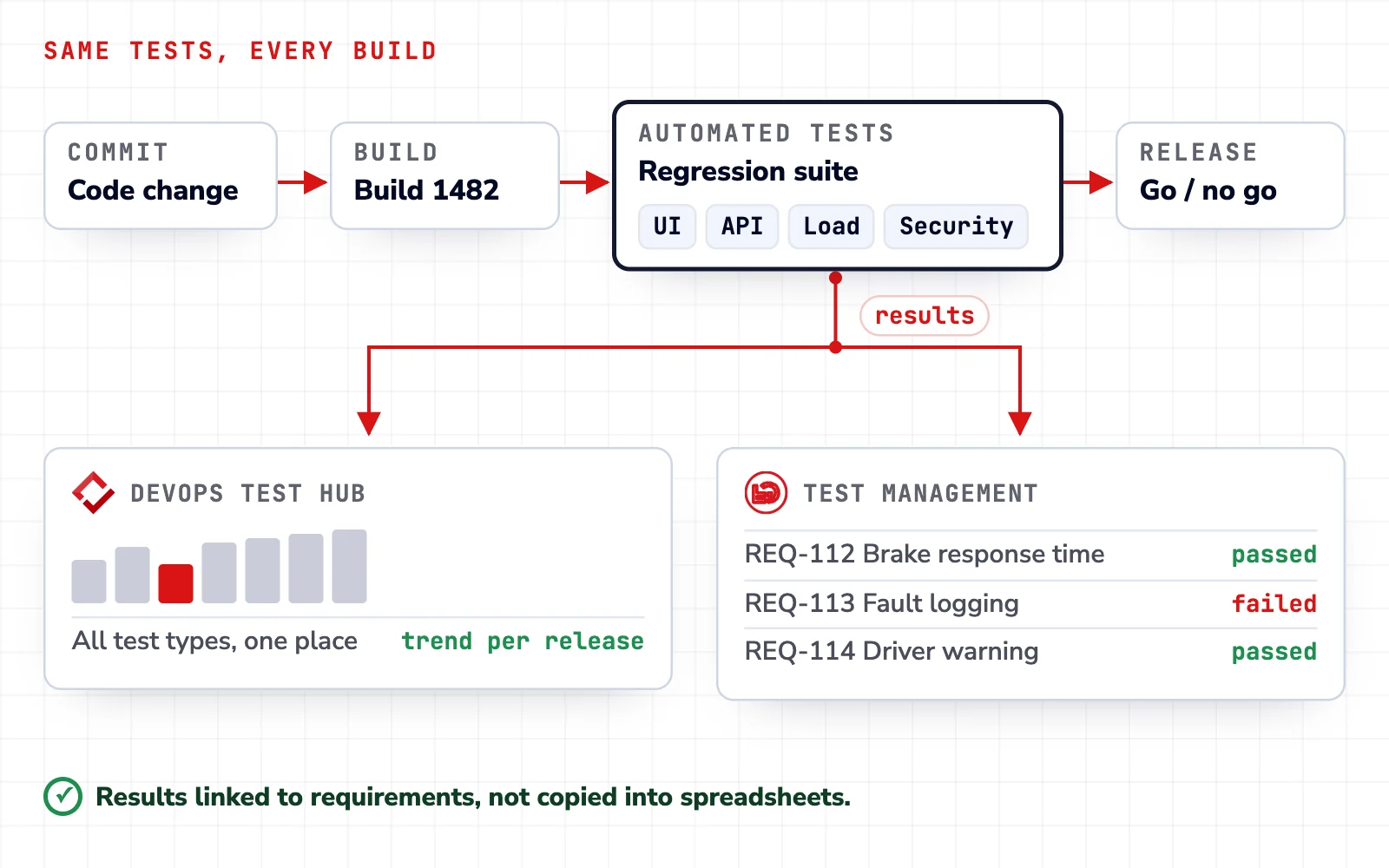
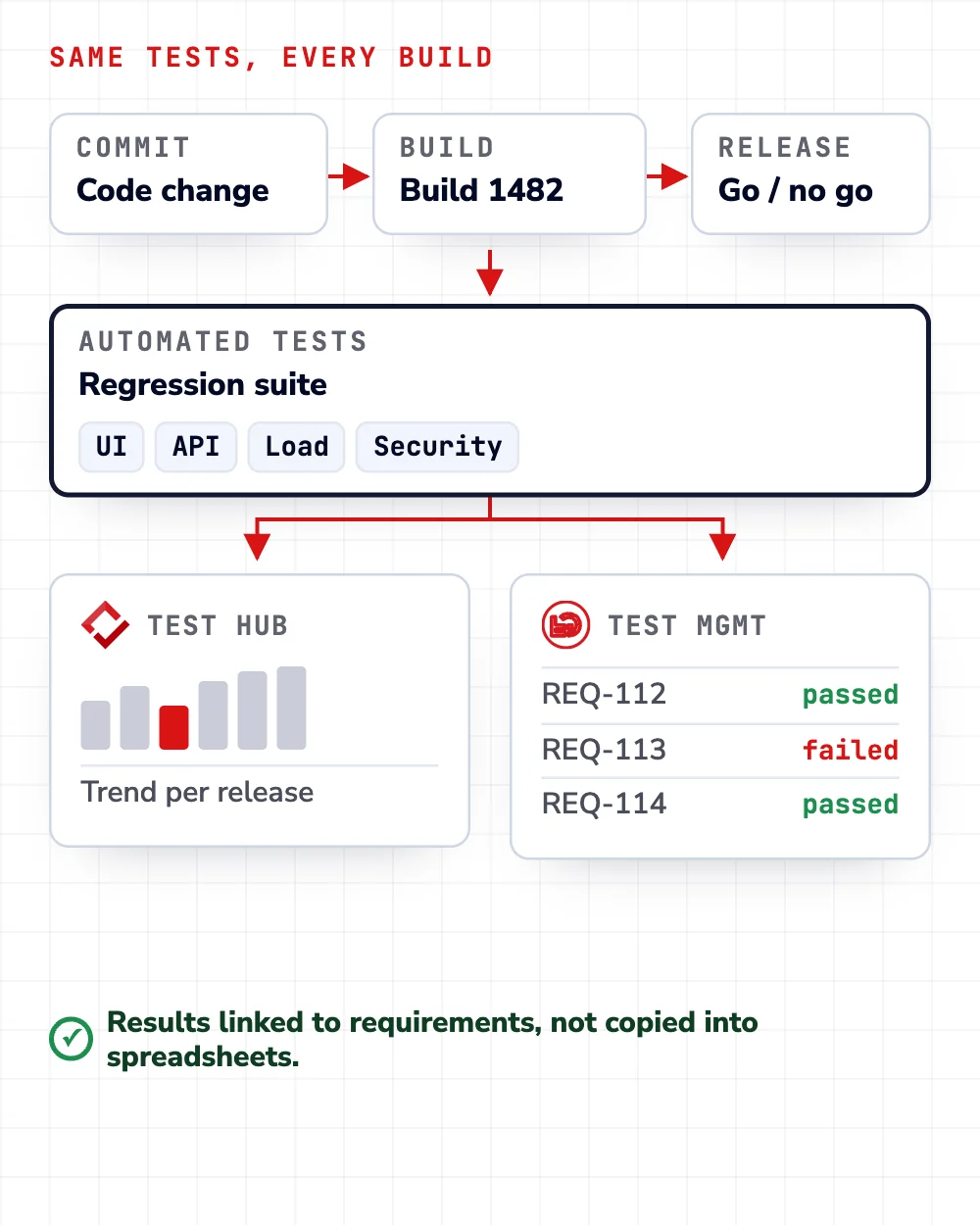
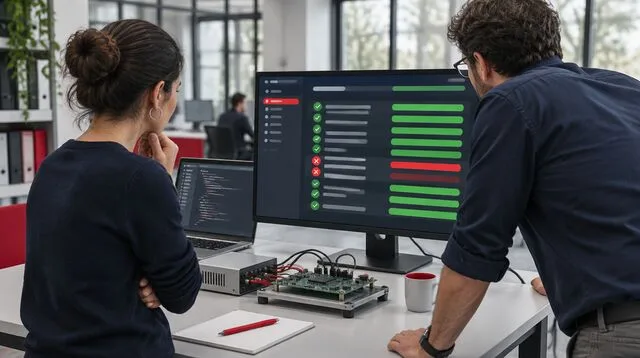
Once the suite is in place, it checks the whole business process again after every change and sends the results to one place. Specialists spend less time on repetitive testing and can use that time for exploratory tests and a closer review of new features before each release.
Your starting point
Most teams come to us at one of these points. Each one ends with tests that run without repetitive manual work.
 Automated runs nobody trusts
 Regression tested by hand
 Scripts nobody maintains
Also a starting point
See what is worth automatingWhat's worth automating
Before any tool is chosen, we sort your tests into three groups. You get this list at the end of the first stage.
Runs often, changes rarely, costly to miss.
Needs a human eye or changes too fast.
Automation would only repeat the problem.
Four questions we ask about every test
01How often does it run?
02Does the flow still change?
03What does a missed defect cost?
04Can the test data be repeated?
Test levels and tools
We choose the tools for your needs, the maturity of your organization and your budget.
Services, messages and interfaces between systems, tested before a screen exists.
Tools

Web, desktop and mobile flows that a user clicks through, end to end.
Tools

Load and stress tests with many virtual users, before a release and after big changes.
Tools

Scans of running applications and source code on every build.
Tools
 Results from every level can go to IBM Engineering Test Management or to your pipeline.
How we work
A pilot on one business flow shows whether automation pays off for you, before the whole suite is built.
We sort your tests and audit your projects, teams and current scripts. You get the list: automate, keep manual, fix first.
We pick the tools for each test level and automate one business flow end to end, running in your pipeline.
We add more flows. The same tests run on every build, and the results land in one place.
We set up the suite and write the first scripts. Your testers write the next ones with us, and we train them on the selected tools.
Ways to work with us
What you get
Every test sorted: automate, keep manual, fix first.
Readable, with naming and review rules.
Tests run on every build.
Linked to requirements, if you use IBM Engineering Test Management.
For existing scripts: what to fix and what to drop.
Your testers run and extend the suite.

Trainings

Services
Tests that run often, change rarely and cost a lot when a defect slips through: regression of stable business flows, API checks and the smoke test on every build.
It depends on your process. Assessing it takes analytical expertise, so we check whether automation can help before any tool is chosen.
Usually, yes. We audit the scripts and the test environment, find what makes the runs unstable, such as timing, shared test data or an environment that is often down, and fix it or tell you which tests to drop.
Both. We work with HCL DevOps Test, OpenText and open source tools such as Selenium, Playwright and JMeter. Which ones fit depends on what you test and what your team already knows.
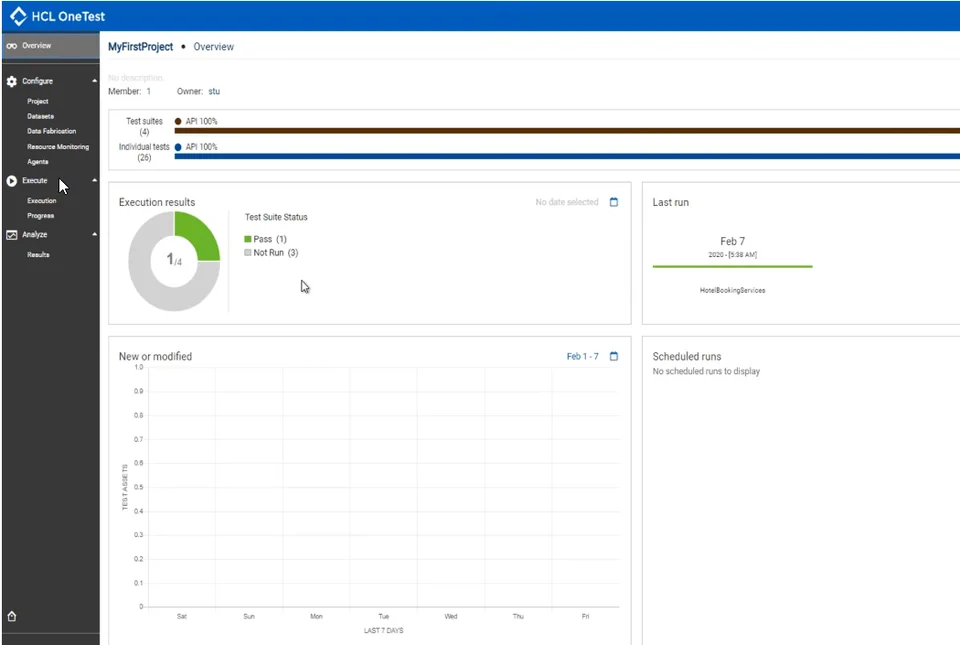
Yes. IBM Engineering Test Management runs automated tests through adapters for IBM and HCL tools, open source frameworks and command line scripts, and collects the results centrally.
No. Without it, the results go to your pipeline or to the reports of the test tool you use.
Yes. We audit and evaluate your current test scripts and optimize them.
Yes. We train test automation teams on the selected test tools.