
The Software and Systems Engineering Experts​
SmarterProcess logo

Contacts

SmarterProcess / ReqPro

ul. Antoniego Pajdaka 5/98
03-134 Warsaw, Poland
NIP : 8921405210
Regon : 146293701

About Products

About us

SP-ELM-01, Foundation, 2 days

Introduction to IBM DOORS Next for new usersIBM DOORS Next (DNG) training

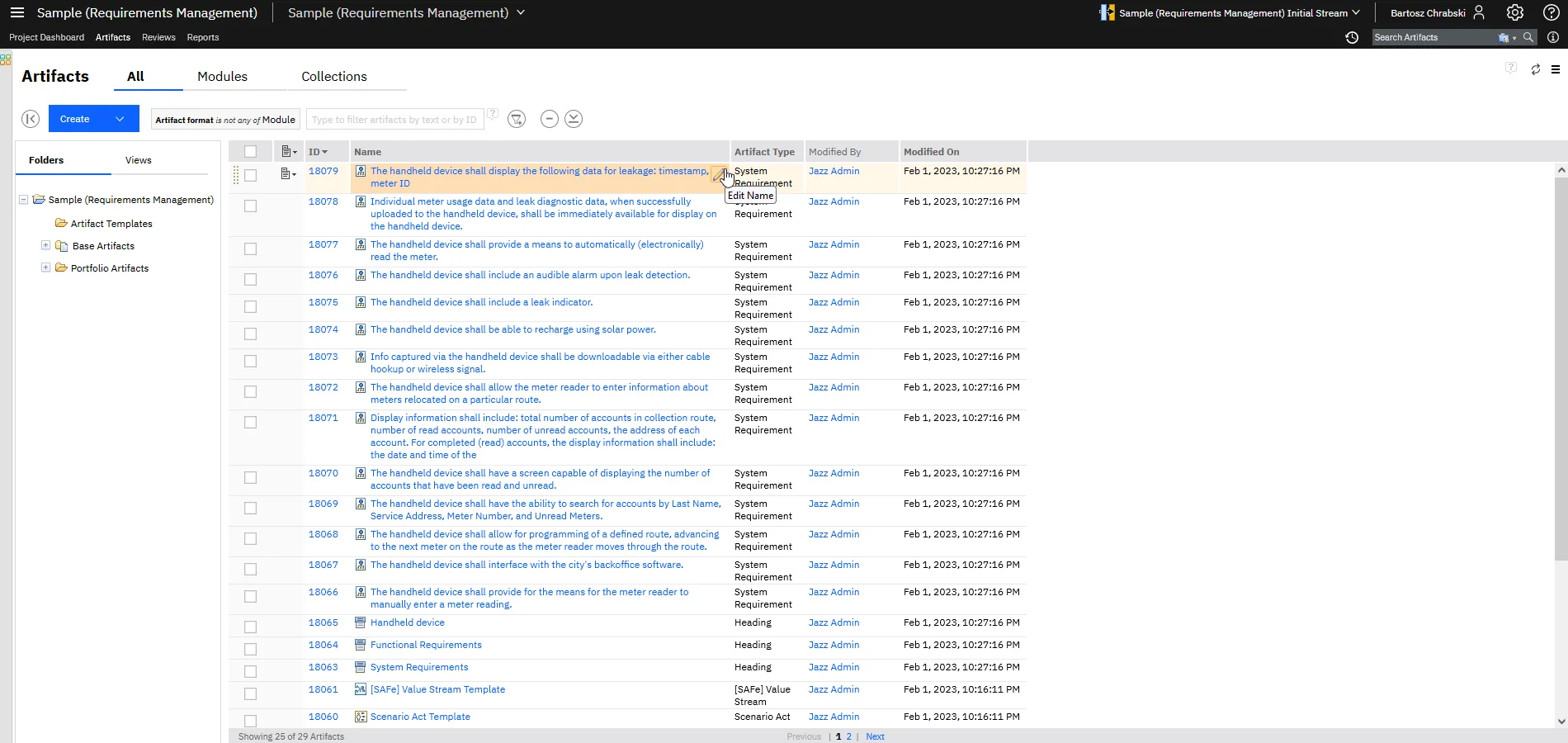
IBM Engineering Requirements Management DOORS Next, from the first module to traceability and baselines. A two-day, hands-on workshop for your team, remote or on-site.

Overview

Start working in DOORS Next in two days

A course for new users of IBM Engineering Requirements Management DOORS Next. It starts with the ELM platform and project areas and ends with configuration management, baselines and reports.

This course covers IBM Engineering DOORS Next, formerly known as IBM Rational DOORS Next Generation (RDNG).

In the exercises you create, edit, link and analyze requirements in a training project. After two days you can write a specification as a module, import Word or Excel files, trace requirements to tests and work items, and baseline what was approved.

The exercises follow the order of real work on a project: structure the requirements, write them, link them, review them and baseline them. This way your team can use DOORS Next on its own project straight after the course.

RequirementsModulesTraceabilityBaselines

Who it is for

Built for people who start with DOORS Next

For new DOORS Next users. You do not need any earlier experience with the tool, and there are no other prerequisites.

Requirements engineersWrite, structure and review specifications in modules.
Systems engineersTrace requirements to design, tests and work items.
Business analystsCapture stakeholder needs and keep them consistent.
Project and team leadsFollow coverage, changes and reviews on dashboards.
For your team4
  • Agree one way to structure requirements in modules, folders and views, so everyone on the project finds things in the same place.
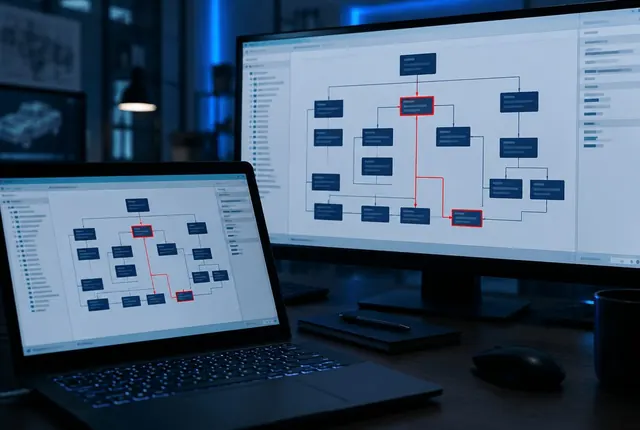
  • Trace requirements to design, tests and work items, then find the gaps in a traceability matrix.
  • Exchange requirements with suppliers and other tools through Excel and ReqIF files.
  • Review requirements together with comments, locks and formal reviews, without sending documents back and forth.
For you5
  • Write a specification as a module, either from an empty module or from an existing Word document you import.
  • Link requirements to designs and test cases, and show those links in views, columns and matrices.
  • Check the history of a requirement, see who changed it and when, and see what else the change affects.
  • Work with streams, change sets and baselines, and compare two configurations.
  • Set up your own attributes, workflows and roles, and export what you need to PDF, Word, Excel or ReqIF.

Not sure the course fits your needs? Tell us about your project and we will suggest the right scope.

Course agenda

Two days, from the first module to baselines

Every module combines a short demo with exercises in a training project.

Day 1

Foundations and modules

8 hours

01ELM Introduction3 topics
  • Overview and Capabilities - ELM
  • Features and Traceability - ELM
  • Dashboards
02Introduction to DNG4 topics
  • Overview of ERMDN (DNG)
  • DNG Project areas
  • Navigating the DNG application
  • Using a dashboard
03Collaboration across the lifecycle6 topics
  • The Engineering solution for ELM
  • ELM products, applications and capabilities
  • Lifecycle projects
  • Collaboration and work items
  • Project dashboards
  • Rich hovers and comments
04Common planning2 topics
  • Real-time planning
  • Release and iteration planning
05Lifecycle traceability3 topics
  • Traceability relationships
  • Linkages
  • Gaps and managing impact
06IBM Engineering reporting2 topics
  • Flow of information
  • Report results
07Essentials of DNG4 topics
  • Basics of IBM Engineering Platform
  • Navigation in ELM DOORS Next
  • Artifact Types and Formats
  • Changing Artifact Types
08Organizing Requirements7 topics
  • Filters and Folders
  • Modules and Artifacts
  • Views
  • Columns
  • Filters
  • Working with sidebars
  • Predefined Attributes
09Modules as Requirement Specifications8 topics
  • Hierarchy in a module
  • Creating Module
  • Importing existing documents as modules
  • Reuse Options
  • Hierarchy in the base artifacts
  • Module and Project Area Search
  • Templates
  • Visualization of dependencies
10Working with Modules5 topics
  • Creating New Artifacts
  • Adding Existing Artifacts
  • Moving Artifacts
  • Editing Artifacts
  • Removing and deleting

Day 2

Traceability, change and configuration

8 hours

11Working with Rich-Text Artifacts5 topics
  • Move Copy, Edit, Delete Base Artifacts
  • Glossary Terms
  • Tables and Pictures
  • Working with Base Artifacts
  • Rich-Text artifact templates
12Collections2 topics
  • Working with Collections
  • Reuse Options
13Importing Artifacts1 topic
  • Exchange via Excel and ReqIF
14Establishing Traceability5 topics
  • Linking techniques
  • Base vs Module Artifact links
  • Gap Analysis, Traceability Matrix
  • Linking to other domains (CCM, AM, QM)
  • Link visualization
15Team collaboration3 topics
  • Locks
  • Comments
  • Reviews
16Managing requirements changes1 topic
  • History
17Process customization4 topics
  • Custom Attributes
  • Workflows
  • Roles and Permissions
  • Templates
18Configuration Management6 topics
  • Introduction Configuration Management
  • Components
  • Streams
  • Change Sets
  • Baselines
  • Configuration comparison
19Reporting4 topics
  • Reporting Options
  • Dashboards
  • Export to PDF, WORD, Excel, ReqIF
  • Report Generation and statistics
20Extensions1 topic
  • Extending product functionality
21Discussions1 topic
  • Q&A session

FAQ

Questions buyers ask about this course

Can you run the training on our own DOORS Next instance?

Yes. We train on our lab environment or on your own instance, also in a network without internet access, with demo data or your own projects.

Which DOORS Next version do you teach?

The current 7.x release. If your server runs an older version, we adapt the exercises to it. On 7.1 and 7.2 we also show advanced filters on enumerated attributes, ancestors and descendants in modules, historical baselines and ReqIF definitions exported from a baseline.

Can you adapt the agenda to our process?

Yes. We add examples from your projects and the standard you work to, for example ASPICE, ISO 26262 or DO-178C.

Do attendees get a certificate?

Yes, a certificate of completion for every attendee.

What happens after the training?

Attendees can send questions to the trainer after class. For longer support we offer mentoring and consulting on your project.

Does the course cover AI features?

AI for DOORS Next comes through IBM Engineering AI Hub, an add-on to IBM Engineering Lifecycle Management, so it is not part of the standard course. If you use it, tell us and we will agree the scope with you.

Talk to our consultants

Leave your details and we will get back to you, usually within one business day.

    We will only use your details to respond to your inquiry. Privacy policy