Home · Solutions · Industrial Machinery & Off-Highway
Solutions · Industrial Machinery & Off-Highway
Machinery and off-highway programs with regulation‑ready safety evidence
EU 2023/1230 and ISO 13849 evidence from one connected IBM Engineering Lifecycle Management toolchain, set up by consultants who work with machinery and off-highway manufacturers.
Industrial Machinery & Off-Highway
The industrial machinery and off-highway sector
Machines are now defined in software and controls
The sector covers machine builders, production line integrators, makers of agricultural, construction and mining equipment, and the suppliers of drives, controls and safety components behind them. Product families stay on the market for decades, are built in many variants and are sold into many countries.
More and more of what a machine does, and how it protects the people around it, is defined in software and programmable controls. Every safety function has to be specified, designed and validated, and the technical file has to show it, again after every change.
 Shift
New Machinery Regulation
Regulation (EU) 2023/1230 replaces the Machinery Directive from 20 January 2027, with new rules for software, safety components and digital documentation.
 Shift
Cybersecurity of machines
Protection against corruption is now an essential requirement. Safety functions must not be affected by malicious access or faulty software updates.
 Shift
Autonomy on the field and site
Off-highway machines gain assisted and autonomous functions, which ISO 25119 and ISO 13849 have to cover alongside classic hazards.
 Shift
Connected machines and updates
Remote monitoring and software updates in the field mean the machine changes after it is placed on the market, and the evidence has to follow.
Engineering challenges
What this means for software and systems engineering
Technical file from engineering data
The technical documentation for EU 2023/1230 has to show how each essential health and safety requirement is met, not only list the standards applied.
Safety functions with a performance level
Every safety function needs a required performance level or SIL, a design that reaches it and a validation record, per ISO 13849 or IEC 62061.
Variants and options
Machines are configured per order. Requirements, risk assessment and tests have to be reused across variants without copying them per customer.
Security as a safety requirement
Protection against corruption and secure update paths have to be specified and verified like any other requirement.
Suppliers of safety components
Drives, sensors and controllers come from suppliers. Their specifications arrive in Requirements Interchange Format (ReqIF) or as documents and have to fit the machine's own trace.
Decades in the field
Machines stay in service for decades. Every retrofit, software update and component change needs the same trace as the original design.
What notified bodies expect
Where machinery teams lose time before conformity assessment
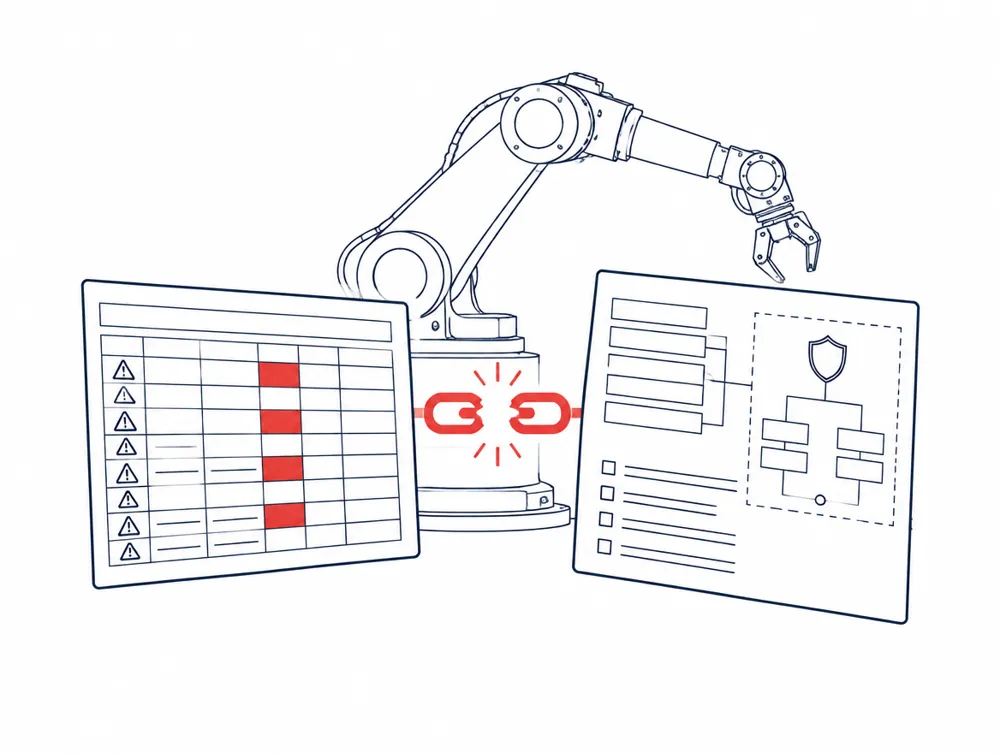
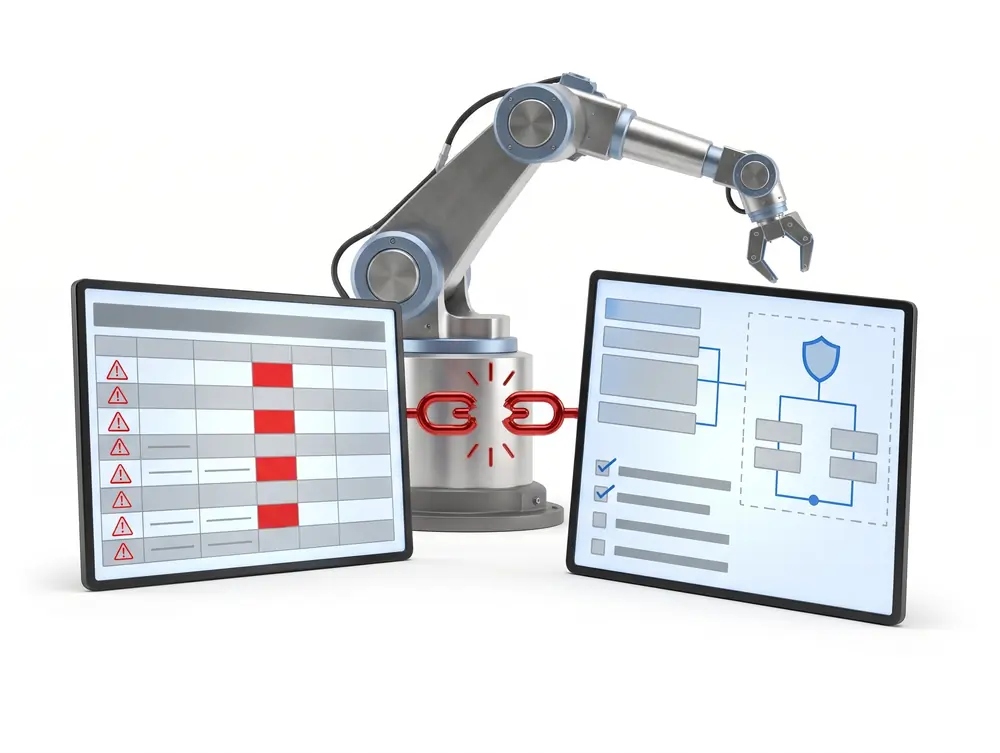
The risk assessment is a spreadsheet. Safety functions derived from it are typed again into a specification, and changes on one side never reach the other.
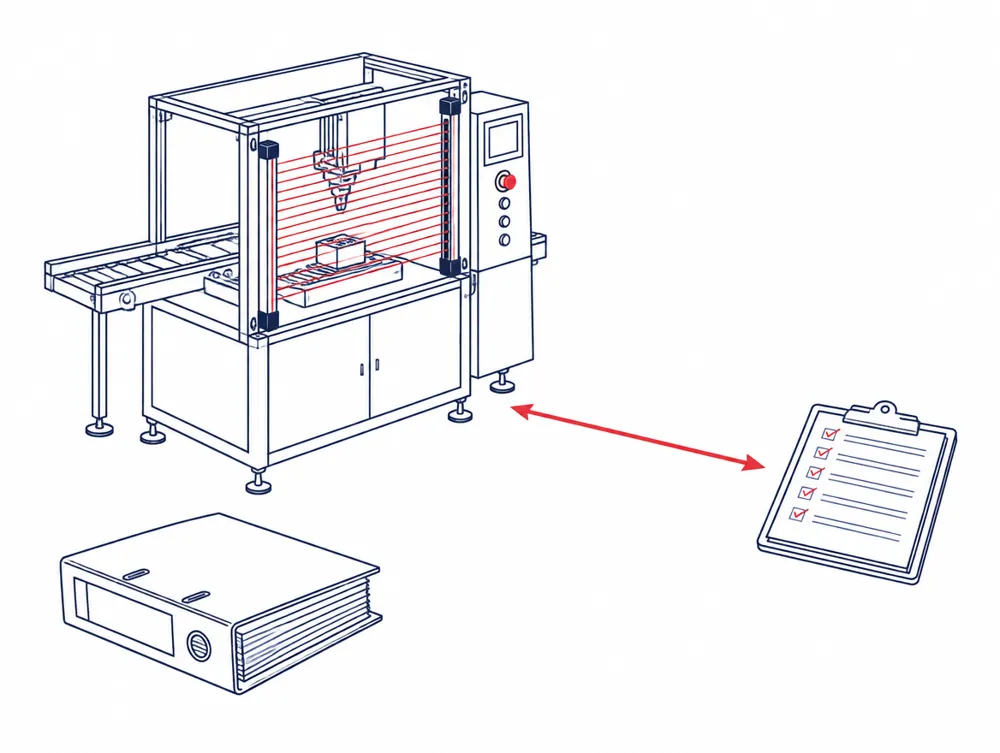
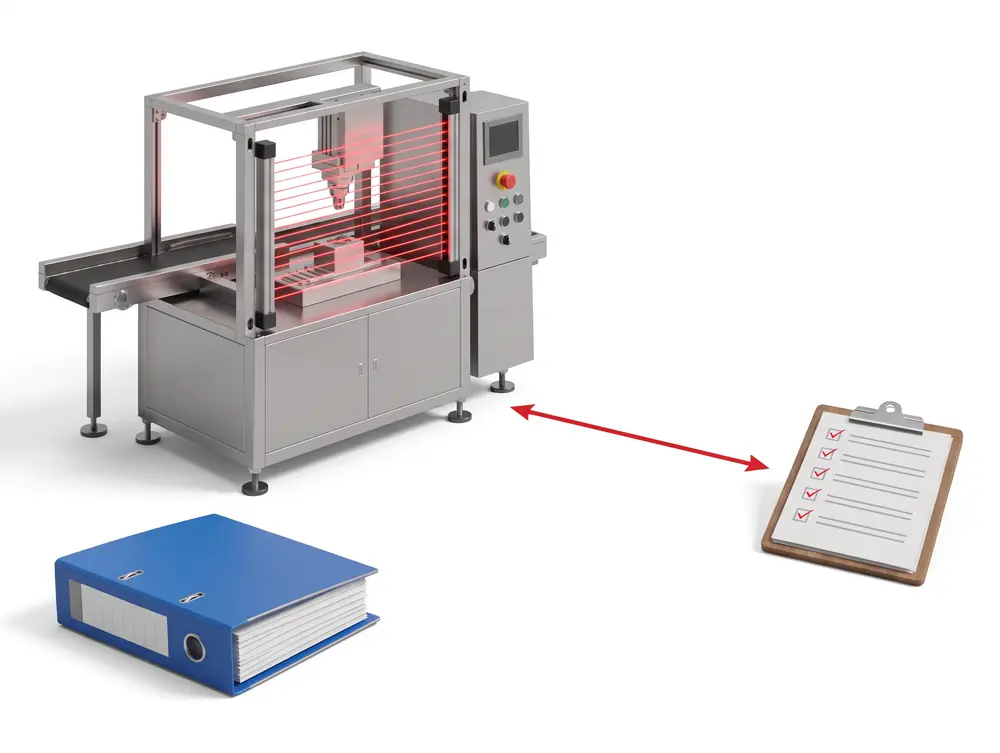
Safety functions are validated on the machine, but the records sit in test reports. Before the assessment the team rebuilds the technical file by hand.
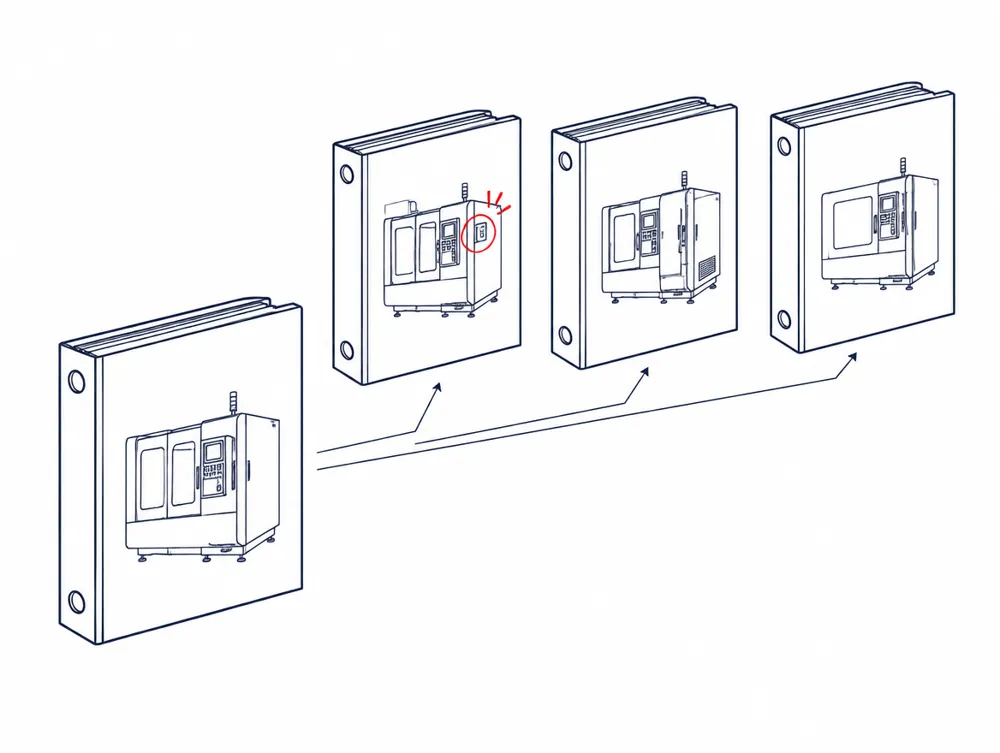
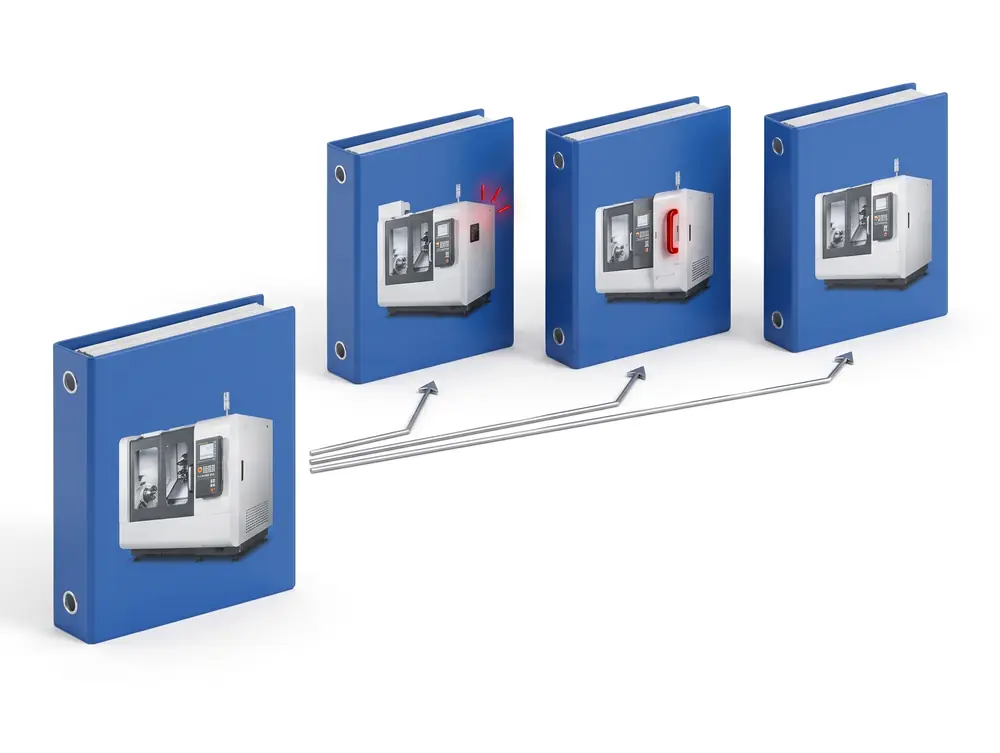
Each machine variant or customer order starts from a copied specification and risk assessment. A fix in one copy does not reach the others.
RiskA hazard has no safety function, or a safety function has no reason, and the technical file cannot show it.
With Smarter ProcessHazards, risk reduction measures and safety function requirements are linked in IBM Engineering Requirements Management DOORS Next, with gap views.
RiskThe notified body cannot see which test validates which safety function at which performance level.
With Smarter ProcessValidation results link to each safety function and its required performance level, and the technical file sections are generated from live data.
RiskMachines are shipped with outdated safety requirements.
With Smarter ProcessOne set of requirements and risk data, with variants managed in IBM Engineering Lifecycle Management Global Configuration Management. Changes are compared and delivered across variants.
Compliance map
EU 2023/1230, ISO 13849 and IEC 62061, mapped to the toolchain
Pick a standard to see what it asks for, and where it lives in your toolchain once we have set it up.
EU 2023/1230 · Annex III
 IBM Engineering Requirements Management DOORS Next
What it asks forEach essential health and safety requirement that applies to the machine identified and shown to be met
How we cover itEssential requirements checklist linked to hazards, safety functions and verification; gap view per machine
 IBM Engineering Requirements Management DOORS Next
EU 2023/1230 · Annex IV
IBM Engineering Lifecycle Optimization – PublishingIBM Engineering Lifecycle Management Global Configuration Management
What it asks forTechnical documentation with the risk assessment, the design and the tests that show conformity
How we cover itTechnical file sections generated from linked requirements, risk data and test results, per baseline
 IBM Engineering Lifecycle Optimization – Publishing
 IBM Engineering Lifecycle Management Global Configuration Management
EU 2023/1230 · Protection against corruption
IBM Engineering Requirements Management DOORS NextIBM Engineering Lifecycle Management Global Configuration Management
What it asks forMachine and safety functions protected against corruption, with a record of software versions and legitimate interventions
How we cover itSecurity requirements on the same links as safety functions; installed software versions recorded per baseline
IBM Engineering Requirements Management DOORS NextIBM Engineering Lifecycle Management Global Configuration ManagementISO 13849-1 · Safety requirements specification
IBM Engineering Requirements Management DOORS Next
What it asks forSafety functions specified with their required performance level (PLr) and characteristics
How we cover itSafety function type with PLr, category, MTTFd and DC attributes, linked to the hazard it reduces
IBM Engineering Requirements Management DOORS NextISO 13849-2 · Validation
IBM Engineering Test Management
What it asks forValidation of each safety function by analysis and testing, with a validation plan and records
How we cover itValidation plan and test cases traced to each safety function and its PLr, with results per machine release
 IBM Engineering Test Management
IEC 62061 · Safety requirements and SIL
IBM Engineering Requirements Management DOORS NextIBM Engineering Systems Design Rhapsody
What it asks forSafety functions with a SIL, decomposed into subfunctions and allocated to subsystems
How we cover itSafety function, subfunction and subsystem modules with SIL attributes and allocation links
IBM Engineering Requirements Management DOORS Next IBM Engineering Systems Design Rhapsody
ISO 25119 · AgPL and software development
IBM Engineering Requirements Management DOORS NextIBM Engineering Test Management
What it asks forAgricultural performance levels for control functions, with development and verification evidence across the life cycle
How we cover itAgPL attributes on safety requirements; test results traced to each requirement per release
IBM Engineering Requirements Management DOORS NextIBM Engineering Test ManagementIEC 61508-3 · Software safety life cycle
IBM Engineering Requirements Management DOORS NextGitLabIBM Engineering Test Management
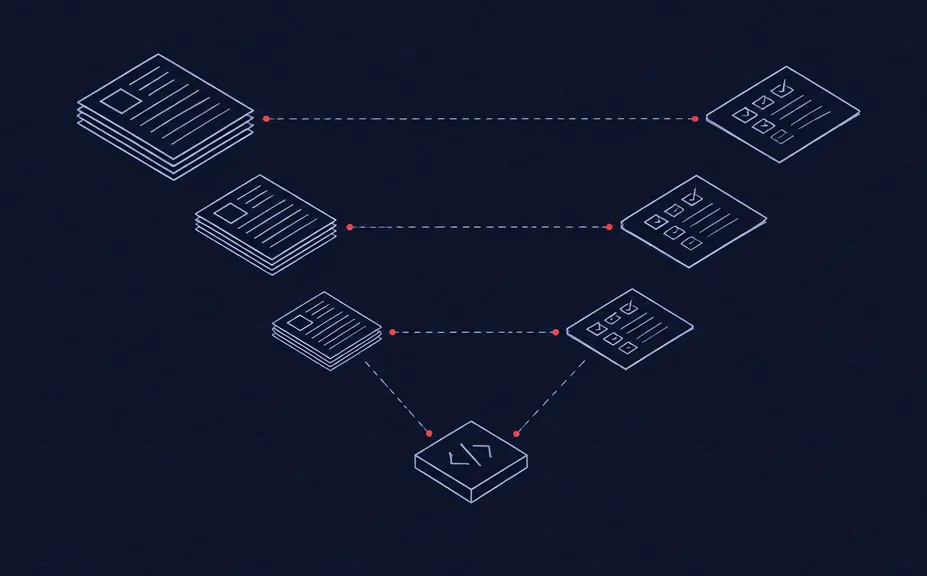
What it asks forTraceability from safety requirements to software design, code and verification in both directions
How we cover itLink rules and trace views from safety requirement to design, GitLab merge requests and tests
IBM Engineering Requirements Management DOORS Next GitLabIBM Engineering Test Management
Book a 30-min compliance gap review
Conformity is declared by the manufacturer and, where required, confirmed by a notified body. Tools hold the evidence; we set them up so the evidence is complete and easy to show.
Capabilities
What your team can do on day one
Baselines for every machine release
Freeze a configuration for each machine release or variant and compare it with the next one, item by item. The technical file always points to the version that was shipped.
- IBM Engineering Lifecycle Management Global Configuration Management
Risk assessment linked to requirements
Hazards, risk estimates and protective measures live next to safety functions, so a change shows which functions and tests to recheck.
- IBM Engineering Requirements Management DOORS Next
Safety functions with PL and SIL
Each safety function carries its PLr or SIL, category and validation status in one view, filtered per machine or variant.
- IBM Engineering Requirements Management DOORS Next
- IBM Engineering Test Management
Control architecture in the model
SysML models of the control system link to safety functions and subsystems, so allocation is visible and reviewable.
- IBM Engineering Systems Design Rhapsody
Software changes with a trace
PLC and embedded software changes go through work items and merge requests linked to the requirement they change.
- IBM Engineering Workflow Management
- GitLab

Technical file from live data
Risk assessment, safety requirements and validation summaries are generated from the tools, in your own document templates.
- IBM Engineering Lifecycle Optimization – Publishing
- IBM Engineering Test Management
See every product we implement and support
IBM Engineering Lifecycle Management, HCL and GitLab: licences, set-up, training and support from one team.
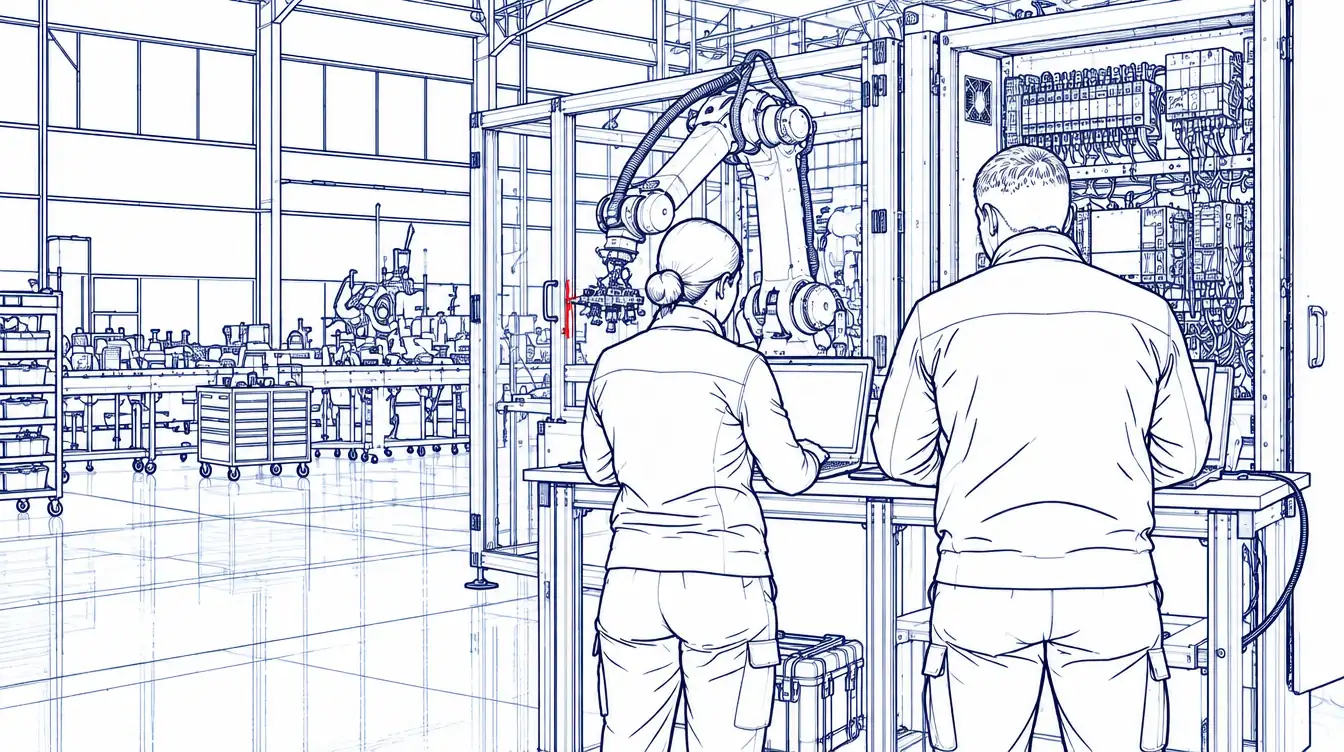
All products → Machine assembly hall
How we work
How we work with machinery and off-highway engineering teams
We start from your risk assessment and technical file, not from the tool. Hazards, safety functions, machine requirements and validation records are set up in IBM Engineering Lifecycle Management so the evidence for conformity assessment comes from daily work.
Hazardlinked to safety function and test
Variantsin one managed configuration
On-premiseon your own servers


FAQ
Questions machinery and off-highway teams ask us
Do the tools need to be qualified under ISO 13849, IEC 62061 or IEC 61508?
It depends on how you use them. Requirements and test management tools do not generate code, so they are offline support tools. Under IEC 61508-3 a requirements tool is usually class T1, and a test tool class T2, because it could fail to reveal a defect. ISO 13849-1 and IEC 62061 ask for suitable tools for safety-related software. We document each use case, its tool class and the checks that verify the output, and keep this with your functional safety plan.
How do we get the technical documentation for EU 2023/1230 out of the tools?
We map the parts of the technical file to artifact types: hazards and risk assessment, essential requirements checklist, safety functions, design and validation. Each section is then a view or a report in IBM Engineering Lifecycle Optimization – Publishing, generated from a baseline in your own template. When a machine changes, the file is regenerated from the new baseline instead of being edited by hand. The regulation allows a digital technical file, so the same data also serves the notified body and market surveillance.
We build machines to order. How do we handle variants without copying the risk assessment?
Common requirements, hazards and safety functions live in shared components. Each product line or customer variant is a stream that reuses them, and IBM Engineering Lifecycle Management Global Configuration Management combines the right versions into a configuration per machine. A fix is made once and delivered to the variants that need it, with a compare view before you accept it. Variant-specific hazards stay in the variant stream, so the risk assessment per machine is still complete.
Our specifications are in IBM Engineering Requirements Management DOORS (9.x), with DXL scripts. How do we move?
Step by step. We inventory modules, attributes, link types and DXL scripts first. Modules move with their original IDs, history summary and links, and each released machine baseline is kept as a baseline in IBM Engineering Requirements Management DOORS Next, so earlier technical files stay reproducible. Most DXL scripts turn into configuration, views or attribute rules; the rest are rewritten against the OSLC and REST interfaces. Teams close to a release can stay on IBM Engineering Requirements Management DOORS (9.x) until it ships.
Our PLC and embedded software teams work in Atlassian Jira and GitLab. Do they have to switch?
No. Software teams keep Atlassian Jira for their backlog and GitLab for code. Jira issues and GitLab merge requests link to the requirements they implement in IBM Engineering Requirements Management DOORS Next, through OSLC links or a synchronization we configure for your setup. Safety-relevant changes can be required to reference an approved requirement or change request before they merge. The trace from safety function to code then comes from the tools, not from a spreadsheet maintained by hand.
How do we cover the cybersecurity requirements of the new Machinery Regulation?
In the same project as safety. Protection against corruption becomes a set of security requirements, derived from a threat analysis, often following the IEC 62443 series. They link to the safety functions they protect, to the design and to verification, and installed software versions are recorded per baseline. One change then triggers both safety and security impact analysis, and the technical file shows both from one source.
New · SmarterWidgets 2.0
Ready-made widgets for IBM DOORS Next
Add them to the ELM Mini Dashboard and hand repetitive requirements work over to them. Each one previews its changes first.
Browse all widgets- Content qualityClean text and glossary linksStyle Cleaner, Link Checker and more
- Links and traceabilityFix, move and inspect linksLink Remover, Module To Base Links and more
- Module structureBuild and repair module hierarchyModule Fill, Module Explorer 2.0 and more
- Configuration and governanceBaselines, data models and auditsBaseline Archiver, Compare Data Models and more
- Reporting and publishingCharts, maps and publishingPublishing URLs, Module Insights and more
- See all widgetsScreenshots and details for every widget


Watch and learn
Our Videos
Demos, tutorials and customer stories on requirements, traceability and test.